Monthly Archives: February 2025

The Rosie Series: A Great Read for Spectrum Riders & Their Significant Others.

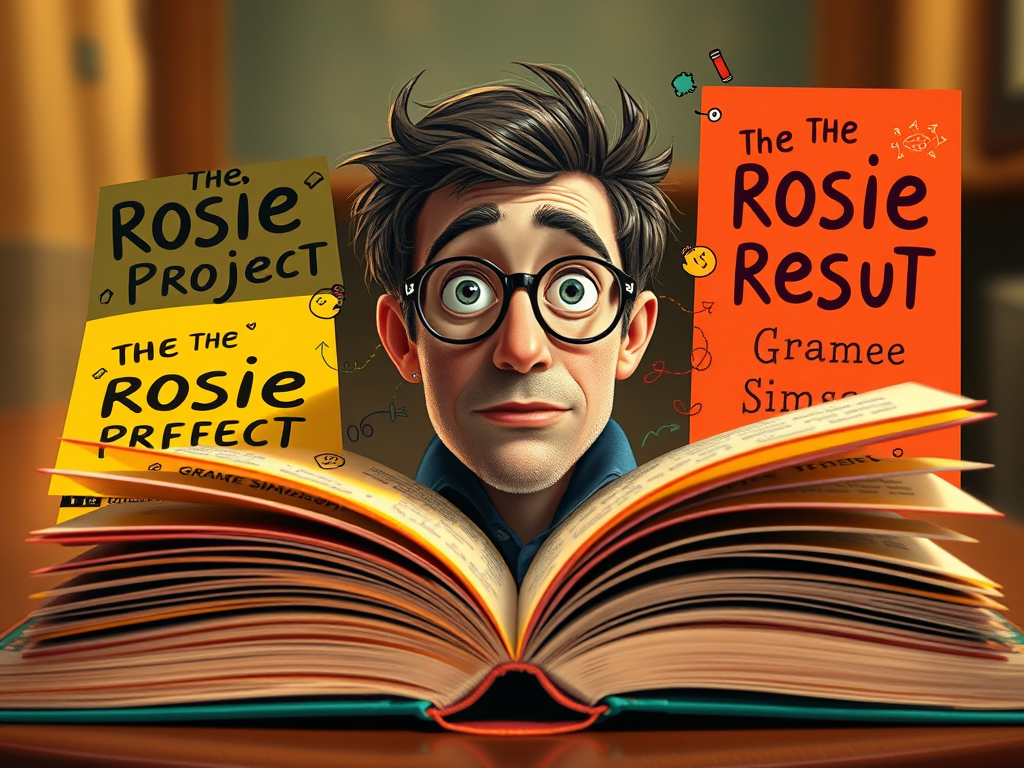
Has AI deliberately misspelled titles and author name?
Has AI misspelled titles and author name to avoid copyright issues?

The Rosie Books: The Rosie Project: 2013, The Rosie Effect: 2014, The Rosie Result: 2019

Graeme Simsion does not claim his series of funny, sensitive books featuring his character, Don Tillman, is about someone with Asperger’s or anyone who finds themselves on the spectrum.  But it is.  My partner read it, and he said that Graeme Simsion writes like I think.  I state my case.

One of the reviewers is quoted as saying “Sometimes you just need a smart love story that will make anyone, man or woman, laugh out loud.”  Reading that you might think that Simsion is making fun of us non-neurotypicals.  But he is honestly not. 

I laughed a lot when I read this book, and I know some of that came from the situations the author put our protagonist (Don) in, and Don’s response to them, but another aspect that made me laugh out loud was the joy of recognition. 

It’s comforting to know that Simsion could take our predicament and in the bright light of day, show the world with humour and tenderness what it’s like to be us.

Throughout these books, I recognized aspects of my grandsons, my daughter and myself. We share some characteristics, but each have put our own personal stamp on the spectrum label, as has every other Aspie.

My partner, who is not on the spectrum, on reading the Rosie Effect, had great admiration for Don (the main character).  “Here is this guy with severe social deficits, doing everything he can to correct them,” he told me when he finished reading the book.  “The guy knows he’s limited and he works in every conceivable way to change that.”

If only to acquaint ourselves with that attitude, and to enjoy a humorous look at what it is to be ‘us’ in social situations, this book truly is a must read.

Tagged , , , , , ,

Navigating the Autism Spectrum: Resources for Families and Individuals

An internet search reveals many resources, based on expertise and experience, for both spectrum dwellers and their families. I’ve found a number of researchers, doctors, psychiatrists who focus on autism, as well as parents and siblings of people with autism who have spoken or written about their experiences. And perhaps most of all, I appreciate the people who live their lives publicly riding the spectrum.

Where did my help come from?  Like many others, my help came from my family.  But not my parents. When I was growing up no information was available about children born on the high-functioning end of the spectrum. I was erratically school smart. And socially a constant and predictable embarrassment.

I talked too loud.  I talked too much.  I talked about weird things—like poetry or plays or Shakespeare. I failed Maths and Science but my essay on MacBeth (13 pages) was put in the reference section of the school library. 

My parents found me an embarrassingly unmanageable conundrum. It was my daughter who first understood the role autism played in our lives.

Fortunately, today there are many resources available to families and autists alike.

There are parents who write books sharing their insights, like Ellen Notbohm, author of Ten Things Every Child with Autism Wishes You Knew.

Researchers like Chloe Silverman, author of Understanding Autism, Parents, Doctors, and the History of a Disorder, trace the significant influence of parental advocacy in adjustments to treatment approaches.

And people on the spectrum like Temple Grandin who have boldly lived as they were born to live—unabashedly honest and talented, and faced the world with their truths.

We can read John Elder Robison’s advice in Be Different, or learn about his experiences with transcranial magnetic stimulation in Switched On.  

We can listen to Ted Talks by Temple Grandin about the positive aspects of the autistic brain, or hear Kate Kahle and Ethan Lisi relate that autism is a difference, not a disorder.

We can read shared stories by women about their relationships, parenting, and navigating the workplace in  Spectrum Women, or watch a variety of filmic portrayals of non-neurotypical life on TV.

These shared experiences open the possibility for self-acceptance and personal growth. It’s a feast. An intellectual and experiential banquet. And we are all invited.

Tagged , , , , , , ,

Embracing Neurodiversity on Valentine’s Day

On Valentine’s Day let’s ditch the negatives of being a Spectrum personality. Let’s remind ourselves that more and more, people are realizing the positive aspects of neurodiversity. This can generate a more understanding response when we experience anxiety in social situations. I see a positive shift in public perspective regarding those of us who process information differently.

For instance, more and more TV shows and movies are featuring characters with neurologically diverse traits. Some individuals on the spectrum are being hailed as best selling authors and speakers. This signals an interest in and acceptance of neurological diversity which has not been seen before.

Sometimes scenes on the big screen can help us see ourselves more clearly. Take the intro of Monk for instance. When the detective goes back to straighten the umbrellas hanging on the wall, my partner always says, “That’s me!”

When Monk is facing an uncomfortable social situation, my heart beats faster and my palms sweat. Oddly enough, I don’t feel nearly as anxious when he’s cornered by a bad guy!

That series, Monk, was first aired in 2002 and ran for 8 seasons. For three years, the show held the record for the largest viewing audience after it aired the final episode. This illustrates the incredible popularity of the show.

There are a few TV series now featuring the concept of someone on the spectrum. After Monk came The Big Bang Theory in September of 2007. This series is about two geeky physicists who share an apartment. It’s not only Aspies who enjoy and appreciate the Big Bang. Over twelve seasons, the series consistently ranked in the top ten in their category, placing first in their eleventh season. Over the years, the series won awards for comedy, writing, and acting.

Since then a few series have sprung up, including the Korean Legal series Extraordinary Attorney Woo. It’s well worth turning on the closed captioning for this one. The main character displays autistic characteristics and verbally expresses her needs and idiosyncrasies.

When I’m watching this show, I often find myself thinking, “Yes! That’s exactly how I feel!”

If you’ve never heard of Extraordinary Attorney Woo, you can watch the trailer here: https://www.imdb.com/video/vi3256992281/?playlistId=tt20869502&ref_=vp_rv_ap_0

Here’s another resource. The Autism Research Institute website will direct you to their list of the top 36 movies and TV shows featuring autism.

Want more variety? Me, too. I’m sure there are other shows and books that I’m not aware of. I’d like to hear about your favorite TV show, book or movie that involves autism.

It’s Valentine’s Day: a day to celebrate our unique qualities. A day to enjoy the current, more positive media representations of neurodiversity. A day to give ourselves the gift of loving acceptance.

Tagged , , ,