Tag Archives: neurodiversity

Autism and Family Dynamics

Growing up in a family divided into two camps was very difficult for her.

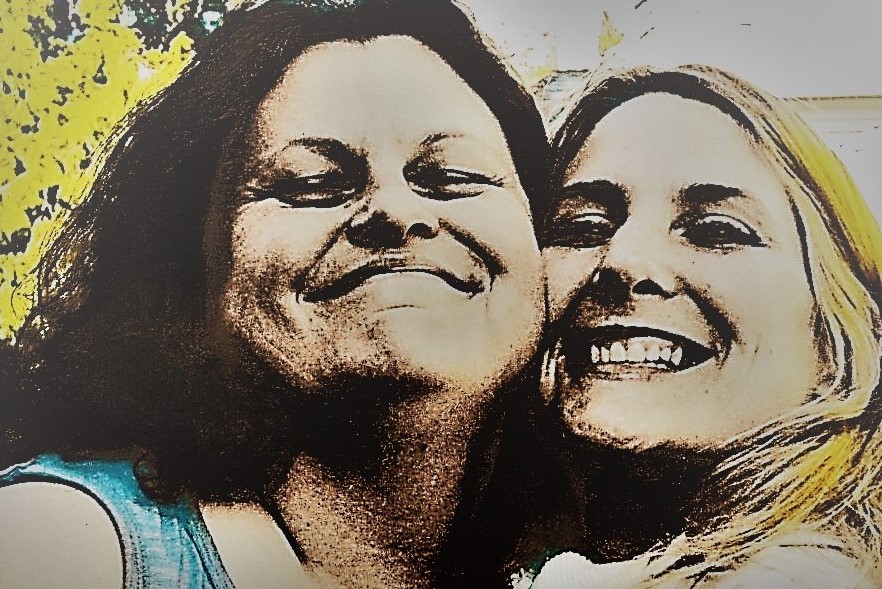
My daughter Suzanne, our dear friend, Mary Anne

I’m a tax preparer. Some would say an apt profession for a person on the autism spectrum.  Working alone, dealing with numbers and calculations, facts and figures.  A skill that requires tremendous concentration and an ability to survey the financial landscape; see the complexities that lie within it.

My daughter, Sue, owns the firm.  She has been keeping books and doing taxes since her late teens. Some of the customers have been loyal to her for more than thirty years.

She is a great boss.  Firm but kind.  She is not autistic.  She has millions of friends (or so it seems) and is very social.

Growing up in a family divided into two camps (autistic and not), was very difficult for her. 

For all of us.  We each have our scars.  My emotional immaturity did not help.  I was very young when I birthed my three children. That’s the reality, not an excuse.

I was very young…

I ‘m wearing the dark shirt. My cousin is with me and my children.

As an aging autist, I look back on my early years, my children’s formative years, and I wince.  However much I loved them, and I did love them unequivocally, I know my child rearing was not any where near ideal.

I didn’t know how to play, how to have fun, how to make sure they had the emotional and physical supports that they needed. 

All I could do was love them in my own way.  Certainly not nearly enough to give them a solid start in life.

And yet, today, all three children have their own homes, are gainfully employed, have friends and family close to them.

I am on good terms with all of my children.  When we talk, it is with respect and love.

I speak with my employer/daughter every day, and the love she has for me comes through clearly, even if those conversations are mostly business.

We all survived.  We are well.  And I am so grateful, because I know I do not deserve this beautiful outcome. 

Tagged , , , ,

Navigating the Autism Spectrum: Resources for Families and Individuals

An internet search reveals many resources, based on expertise and experience, for both spectrum dwellers and their families. I’ve found a number of researchers, doctors, psychiatrists who focus on autism, as well as parents and siblings of people with autism who have spoken or written about their experiences. And perhaps most of all, I appreciate the people who live their lives publicly riding the spectrum.

Where did my help come from?  Like many others, my help came from my family.  But not my parents. When I was growing up no information was available about children born on the high-functioning end of the spectrum. I was erratically school smart. And socially a constant and predictable embarrassment.

I talked too loud.  I talked too much.  I talked about weird things—like poetry or plays or Shakespeare. I failed Maths and Science but my essay on MacBeth (13 pages) was put in the reference section of the school library. 

My parents found me an embarrassingly unmanageable conundrum. It was my daughter who first understood the role autism played in our lives.

Fortunately, today there are many resources available to families and autists alike.

There are parents who write books sharing their insights, like Ellen Notbohm, author of Ten Things Every Child with Autism Wishes You Knew.

Researchers like Chloe Silverman, author of Understanding Autism, Parents, Doctors, and the History of a Disorder, trace the significant influence of parental advocacy in adjustments to treatment approaches.

And people on the spectrum like Temple Grandin who have boldly lived as they were born to live—unabashedly honest and talented, and faced the world with their truths.

We can read John Elder Robison’s advice in Be Different, or learn about his experiences with transcranial magnetic stimulation in Switched On.  

We can listen to Ted Talks by Temple Grandin about the positive aspects of the autistic brain, or hear Kate Kahle and Ethan Lisi relate that autism is a difference, not a disorder.

We can read shared stories by women about their relationships, parenting, and navigating the workplace in  Spectrum Women, or watch a variety of filmic portrayals of non-neurotypical life on TV.

These shared experiences open the possibility for self-acceptance and personal growth. It’s a feast. An intellectual and experiential banquet. And we are all invited.

Tagged , , , , , , ,

Positive Aspects of Life on the Spectrum: Sheila’s Story.

In this blog series, I am presenting lives that express the ways in which not being Neuro Typical is a career asset.  Thinking outside the box is normal for people on the autism spectrum. In certain circumstances this attribute of our condition can be beneficial. 

To continue Sheila’s story, begun in the previous blog, I will first relate some background information, along with some early practices she implemented. These temporary solutions to her son, Seamus’ social and learning problems ultimately led to her ability to explore unique and innovative methodology, which will be discussed in the next blog in this series. 

Sheila’s school experience was successful both academically and socially. However, later circumstances rendered her a single mom on welfare with an autistic child, Seamus.

As a result, Sheila experienced the understanding of how frustrating life can be for both parent and child, when someone is trying their best, socially and academically, and yet, is largely unsuccessful at one or both.

Seamus was a loving boy, but he found socializing at school impossible. Ostracized and bullied, he could never join in any games, and he had no friends to ‘hang’ with at lunch or recess. Sheila decided to see how she could help.

Every lunch hour she joined Seamus on the playground. Standing with him, she would ask, “Who wants to play baseball?” Invariably several children would crowd around.  “Alright,” she’d say, “There’s only one rule, and that is, Seamus gets to play.”

The ‘Seamus ball game’ soon became a popular lunch time activity! Sheila would also stay later on occasion to help in the classroom if Seamus was having a problem with the work. Her organized approach, ability to quickly assess a situation through Seamus’ eyes and her friendly but authoritative air made her an asset in the classroom.

In the late 1990’s, not a lot was known about the autism spectrum, especially the high end kids who seemed to have no trouble learning but couldn’t manage their social life. After countless incomplete diagnoses, from leaky gut to ADD and ADHD, Sheila felt at a loss. She didn’t like the effect of the medications prescribed for her son, and he didn’t either, often refusing to take them.

One day, after attending a conference on autism, a teacher from Seamus’ school phoned Sheila.   I think I know what Seamus has, she told Sheila. When given a list of the symptomatic behaviours, Sheila recognized to her surprise, that it was not only Seamus who was on the spectrum–she was on the spectrum, too! This self-knowledge opened up a wide range of concerns and possibilities for both Sheila and her son.

In her book, Aspergirls, Rudy Simone states that for adults, being diagnosed can be a relief. A diagnosis for a child can also bring relief for parents like Sheila, who until Seamus’ diagnosis did not know where to turn for helpful information. In the years before Sheila was diagnosed, her focus was on helping Seamus.

Little was known about how to help those on the high end of the spectrum, then known as Asperger’s. With the help of his school staff, his family doctor, and Sheila’s campaigning, Seamus was able to access a facility for testing.  Once he was diagnosed, funding became available for special programs and activities for him. 

Every dime had to be accounted for, and it could only be spent on the special needs or activities for him, Sheila recalls.

Sheila’s experience with her son provided her insight into similar situations. She understands the frustration of having a child who neither learns nor interacts in the same way as their peers. She has gained the power of finding those keys which open doors for students who feel stymied by the different ways their brain works.

Success is what these kids need to experience. Sheila tells me, referring to both behavioural and learning issues. Helping her students find the self-confidence that will allow for success, is the motivating factor in her work.

Tagged , , , , , , , ,