Category Archives: Autism Spectrum

A Child Remembers

Hi mom,

When I think about how we used to go into the forest and pick wild strawberries, spotting deer and singing songs…you and Bev picked most of the berries,  Sue and I were not very focused…but you always picked enough for wild strawberry shortcake…I also remember how you played baseball with us and our friends and how you took all of us to the beach in that big old Pontiac wagon…and how we pushed that car to the gas station….those were the best times of my life!

Thanks for being such an awesome mom!

MERRY CHRISTMAS 

I received this message from my son this Christmas. If you read my previous blogs on my take on my parenting skills or lack thereof, you will know why this message means so much to me…

Often when we think we are failing because of our inability to ‘get’ what other parents/friends/families do, we actually manage.

Yours truly,

Margaret Jean.

Tagged

Understanding Autism: A Response to Kennedy’s Claims

A Statement from the BC Autism Support Network:

September 24, 2025
POSITION STATEMENT REGARDING AUTISM
& ROBERT F KENNEDY, JR


As a registered charity led by parents supporting other parents in accessing
science-based autism treatments, we feel compelled to join the growing chorus of
concern surrounding Robert F. Kennedy Jr.’s most recent unfounded and
misleading claims.

We echo the powerful statement by Dr. Mitch Prinstein of the American
Psychological Association, which deserves to be heard in full:

“Public health policy must be guided by rigorous research and scientific
consensus.


We are deeply troubled by the reckless promotion of
unsupported research that unjustifiably blames mothers and fuels
stigma against individuals with autism.


Research shows that autism has complex, multifactorial origins—genetic, biological, and
environmental—and represents a spectrum of neurodevelopmental
differences, not a single condition with a single cause.


We welcome new funding for autism research, but for this initiative to succeed, it must
amplify valid scientific findings and support evidence-based, neurodiversity-affirming practices that help autistic people thrive across their lifespan.”


As an organization grounded in lived experience and evidence-based advocacy, we
stand firmly against rhetoric that promotes stigma, misinformation, and outdated
narratives.

Autism is not caused by parental actions—it is amultifaceted
neurodevelopmental condition that deserves understanding, respect, and support
rooted in science.

We urge all public figures, particularly those seeking leadership roles, to engage
meaningfully with both autistic self-advocates and caregivers, and to prioritize
science, respect, and lived experience over stigma and misinformation.

Respectfully Yours,
Jennifer Newby
Executive DirectorWe recognize how distressing this is for our community. 

As always, our support group meetings for caregivers are completely free. 

Please join us. 
 Upcoming Events

Tagged , ,

Growing up with my Children: an autist’s perspective on parenting

I had a great time growing up with my kids.

We played ball.  We climbed trees. We went berry picking and came home and made cakes oozing with fruit. We walked, checking out the neighbourhoods, the streets and fields around where we lived.

We learned to do cartwheels together on the front lawn, near the old Gravenstein apple tree.

We would sometimes all load up in the little Cortina and go to the beach or the park.

For a time, we lived in a park, a forty-six acre nature park while their dad was a park caretaker.

The kids had dogs and the park had two streams running through it and a swimming hole.  There were swings and slides and a baseball diamond, creeks and bridges.

There were huge trees in the park, cedars and beeches and firs, and all kinds of exotics that the original owner had planted.

My children would run and play with their dogs, with their friends.

They went off to Navy Cadets every week.  Even my son pressed his own uniform pants.  He said I didn’t do it right!  They polished their shoes and kept themselves well turned out for the event.

If there was a quarrel or a fight between them, I would make them face each other and with me in the middle, they would each get a turn to tell their version of what happened, no interruptions. 

Then we would decide what had to happen from there: an apology (usually mutual) or sharing, or whatever the situation called for.  There were consequences, mutually decided, sometimes grudgingly agreed to. But the children knew it was fair and right.

What I got from my childhood, my daughter once said to me, is a sense of justice.

My children still remember how beautiful the park was when all the fruit trees blossomed in the spring. And the wonderful harvests in the fall.

Yes, life was not always idyllic.  In fact, far from it sometimes.  But these memories are what we hold on to…

Tagged , , , ,

Free: Autism Parenting Summit May 16-19

An online summit with guest speaker Dr. Temple Grandin. 

As the parent of a child on the autism spectrum, you will hear discussion about:

  • How to help your child thrive
  • How to navigate challenges presented by the autism spectrum
  • How to give your child the best start.
  • Effective strategies for dealing with:
  • Behaviours, social and communication issues,
  • Everything from picky eating to mental health and anxiety.
  • How to help your child transition into adulthood.
  • Executive function and motor skills, special education.

Other Keynote Speakers:

Dr. Suzanne Goh, Chief Medical Officer, Cortica with Building Your Child’s Brain: Simple Ways to Boost Learning & Behavior

Dr. Eric Weiss, Physician & Surgeon, North Florida Stem Cells: The Biologic Basis for Stem Cell Therapy

Dr. Jeffrey J. Guenzel, CEO & DIR® Institute Director: DIRFloortime® and Autism: A True Strength-Based Approach

And many other experts.  Get full information here: https://autismparentingsummit.com/?utm_medium=cpc&utm_source=facebook&utm_campaign=Warm%20summit%20campaigns%20WC%2014th%20April&utm_content=Site%20visitors%20-%20newsletter%20-%20social

Tagged , ,

Autism and Family Dynamics

Growing up in a family divided into two camps was very difficult for her.

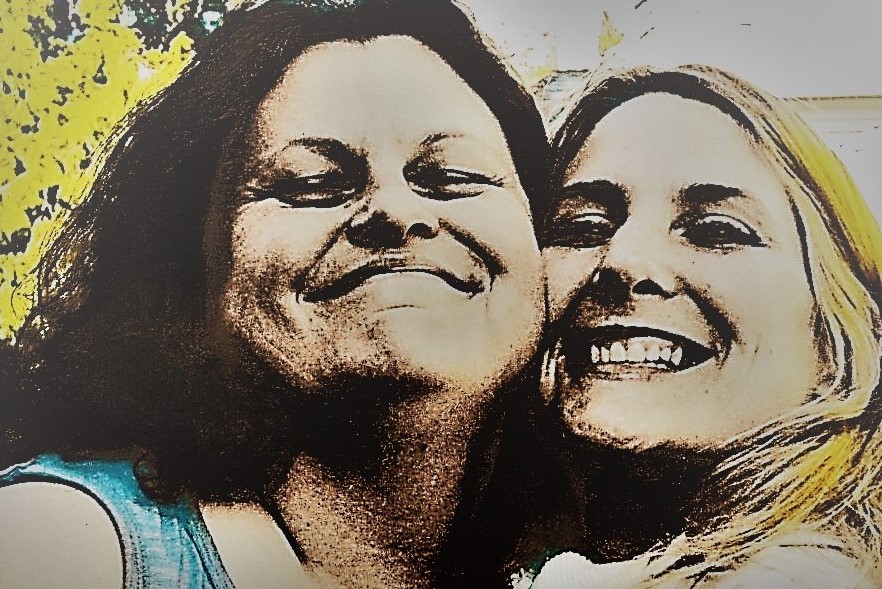
My daughter Suzanne, our dear friend, Mary Anne

I’m a tax preparer. Some would say an apt profession for a person on the autism spectrum.  Working alone, dealing with numbers and calculations, facts and figures.  A skill that requires tremendous concentration and an ability to survey the financial landscape; see the complexities that lie within it.

My daughter, Sue, owns the firm.  She has been keeping books and doing taxes since her late teens. Some of the customers have been loyal to her for more than thirty years.

She is a great boss.  Firm but kind.  She is not autistic.  She has millions of friends (or so it seems) and is very social.

Growing up in a family divided into two camps (autistic and not), was very difficult for her. 

For all of us.  We each have our scars.  My emotional immaturity did not help.  I was very young when I birthed my three children. That’s the reality, not an excuse.

I was very young…

I ‘m wearing the dark shirt. My cousin is with me and my children.

As an aging autist, I look back on my early years, my children’s formative years, and I wince.  However much I loved them, and I did love them unequivocally, I know my child rearing was not any where near ideal.

I didn’t know how to play, how to have fun, how to make sure they had the emotional and physical supports that they needed. 

All I could do was love them in my own way.  Certainly not nearly enough to give them a solid start in life.

And yet, today, all three children have their own homes, are gainfully employed, have friends and family close to them.

I am on good terms with all of my children.  When we talk, it is with respect and love.

I speak with my employer/daughter every day, and the love she has for me comes through clearly, even if those conversations are mostly business.

We all survived.  We are well.  And I am so grateful, because I know I do not deserve this beautiful outcome. 

Tagged , , , ,

Autism and Life Beyond the Herd

This above all: to thine own self be true, And it must follow, as the night the day, Thou canst not then be false to any man*. 

You may often hear or read this quote: the epitome of self-awareness. As someone on the Autism Spectrum, it registers with me. It must be so for many people now and also throughout the ages since Shakespeare’s time, because it is often quoted.

And yet, it is commonly known that humans are born with the herd instinct.

For instance, in Chapter nine of Atomic Habits, James clear states that the human brain is programmed with the desire to be like everybody else. 

This need originates in a protective instinct which triggers the drive to be included–The aptly named ‘herd instinct’. To belong, to imitate the successful integrative and admired behaviours of others, to go along with behaviours we might secretly deplore, stems from our earliest prehistory.

As cave dwellers, and tribesmen, living within the group we were protected, we could benefit from shared resources.  On our own, alone, banished, or ostracized, we became easy targets for wild animals, other tribes, disease and injury. Vulnerable.  Miserable. Usually prey. Ultimately dead.

Safety was an overwhelming issue. As for procreation, the presence of at least one other person was required. Then there’s the bonus of shared resources as well as shared responsibilities. Going along with the prevailing group meant not only survival but a more desirable quality of life.

Theoretically our habits and behaviours are influenced by the culture in which we are born, raised and which we enter into as adults. 

Scientifically we are told that our brains are programmed to want to be aligned with the position assumed by the majority, and the powerful.

Research has proven time and again that being smart, being right, being true to yourself is less important than aligning oneself with the prevailing opinion.  This is ingrained in our being. Man is mentally programmed to respond in this manner.

I realized as I read this that, surprisingly, I had never wanted to be like everyone else.  In my memoir “Unforgiving” I explained that while my teenaged peers wanted to be different, they only really wanted to be different from their parents–not from each other. As for me:

I wanted to be the one and only Margaret Jean on the planet, and I wanted to be indelibly stamped as that single original sample of humanity whose Margaret Jean-ness would permeate every cell of her body and shine through everything she did.

That led me to think about other autistic people, in my family and in my friendships and acquaintances. Many of them have expressed the same feeling: Yes, we want to be accepted.  Yes, we want to be understood.  And no, we do not want to be like everybody else.

We value our uniqueness, the different way we perceive situations and people. Our evaluation of events and information. For instance, what if Temple Grandin had given in to everyone else’s concept of the behaviour of cattle, ignoring her insights as to their behaviours?  What if she had not had the courage to pursue the possibility of uniqueness in her brain?

We shouldn’t feel apologetic for being autistic.  It is how we were born, who we are.

I may misunderstand some social situations, but I may also have a deeper understanding of some.  I may be more intent on social justice than I am on fitting in. Is that really a bad thing? 

Our friends and family want to draw us into the herd for our own protection.  For our own social welfare.  For our own social ease. Admirably, they are thinking of our own good.

But is it what we want? Do we seek permission to be who we intrinsically are?  Do we need it? Those few who make it—how do they do it? By accepting themselves…By being true to who they are.

*Hamlet, act I, scene iii, lines 78–80.

Tagged , , , , , , , , ,

Autism: Criticism and Self Doubt

Inez Garcia 1974

Growing up on the Autism spectrum, being constantly criticized for my behaviour, often justifiably so, created tremendous self-doubt.

This criticism made it easy for people to convince me that behaviour that I felt was entirely appropriate was in fact, unacceptable.

Lately, I’ve read James Clear’s Atomic Habits, in which he states that a habit he has ingrained is that he has to write every day.  He only has to write one line, but the habit he’s ingrained is, he has to write every day.  That, he says, is how he became a writer.

I was born a writer.

In my early teens I wrote poetry, the words flowing from an inner source that moved my pen across the page.  I could easily express emotion and lead my audience to exactly where I wanted to take them. 

People listened attentively and responded with enthusiasm.  For me, it was as natural as breathing.

Then I bound myself into a relationship with a much older man.  A well-educated man who had studied the classics and philosophy. A man raised in an atmosphere of Emily Post’s Blue Book of Etiquette. A man who denigrated my writing.

One day, in a passionate sense of injustice I wrote poetically about an incident that I heard about in the news. 

The news article featured a woman of strong character–Inez Garcia. A woman who was raped. Two men assaulted her, one of whom weighed over three hundred pounds.  He held her down, while the other man raped her.  When they were done, they let her go.  Threats against her life were uttered.  Incensed and traumatized, she went home. She grabbed her son’s gun. She hunted one man down. Shot and killed him. The other man fled. 

I wrote the ballad in her defense when she was arrested and charged with first degree murder.

My husband was shocked. It was 1974 and the very thought that I would dare to write about rape–a forbidden subject—offended him.  That I could even consider defending the woman he found despicable.  The thought of me submitting the ballad to any publication appalled him.  He told me to burn it.

At the time, Women’s Rights and the Chicano Movement were gaining ground in the San Francisco Bay area.  When news of Garcia’s plight became known, feminists took up her cause, and Garcia herself became a speaker addressing women’s groups.

According to Wikipedia, I was not the only woman to take up the pen in Garcia’s defense.

As a cause celebre, her (Inez Garcia’s) case inspired numerous works of art and music, including the Beverly Grant folk song “Inez”, performed with the group The Human Condition; Marge Piercy’s poem “For Inez Garcia”;[5] and Jayne Cortez’s poem “Rape.”[6]

These women became noted for their work in Garcia’s defense and went on to become well published writers.

As for me, I didn’t burn my ballad, but I did essentially fold up my writing persona and immerse myself in motherhood and housekeeping.

That I gave up writing at that point in my life was not my husband’s fault.  It was entirely mine, for giving his opinion so much weight, and my own so little recognition.

Years later and in a more progressive relationship, I entered a university undergraduate program where I studied literature, including contemporary poetry. Writing that I found surprisingly reminiscent of my early work. 

And by degrees I learned to trust myself to write again, encouraged by professors who recognized my latent talent and helped me publish.

But the process is not the same. It’s a constant battle to put my writing first, to allow myself to sit down and open that channel. 

This is my continued fascination with Atomic Habits:  sooner or later the habit of sitting down to write will be ingrained, and I will once again, see myself as a writer.

If you are having self-doubts, if you feel that what you believe is worthwhile is being negated by everyone around you, don’t give up and please, don’t give in. 

Trust yourself, and find your place in this world.  It’s waiting for you.

Inez Garcia was retried and exonerated after serving two years in prison.

https://en.wikipedia.org/wiki/Inez_Garc%C3%ADa  Research data’

Tagged , , , , , ,

This is How They Talk About Us…

The current image has no alternative text. The file name is: mjzeke-6.jpg

I thought it would be interesting to see what various individuals, professionals and non, have to say about us. Here is what I found:

Medical Institutions and Programs tend to view us from a broad neurological or developmental perspective. The word ‘disability’ is regrettably brought into play by the CDC.

National Institute of Mental Health:  Autism spectrum disorder is a neurological and developmental disorder that affects how people interact with others, communicate, learn, and behave.

Centres for Disease Control and Prevention (CDC): Autism Spectrum Disorder (ASD) is a developmental disability that can cause significant social, communication and behavioral challenges.

Other institutes and services see us as having a condition, needing support. But then doesn’t everyone need support? Friends, family, therapists even?

Cleveland Clinic: Autism is a condition that affects how your child socializes and behaves. Early signs include limited eye contact and body language and repetitive motions …

National Health Services, UK: Autism is different for everyone. Autism is a spectrum. This means everybody with autism is different. Some autistic people need little or no support. Others …

Reading from Wikipedia, I wonder if we are neurodevelopmentally disordered, or if perhaps it’s everybody else? “Persistent deficits” seems a rather unhelpful terminology.

Wikipedia:  Autism spectrum disorder (ASD), or simply autism, is a neurodevelopmental disorder “characterized by persistent deficits in social communication…”

And then we come to the researchers–finally, a ray of hope!

Bright Autism: “The future of autism research is not just about finding a cure, but about understanding and embracing the diversity of the human brain.”

Psychology Today, May 13, 2024 : Autistic people may be more likely to voice concerns when made aware of inefficient processes and dysfunctional practices in the workplace than non-autistic…https://www.psychologytoday.com/ca/blog/women-with-autism-spectrum-disorder/202404/are-autistic-people-more-likely-to-speak-up-at-work

This last quote looks interesting. Well worth following up in a future blog.

What have you heard about autism? And how does it affect you? Does what other people say affect you? I know a book that can help you with that: The Courage to be Disliked by Ichiro Kishimi and Fumitake Koga. But that’s another blog altogether.

And how do we prefer to be described? A UK study gave the following results:

Sage Journals: On the preferred language to describe individuals on the spectrum: The term ‘autistic’ was endorsed by a large percentage of autistic adults, family members/friends and parents but by considerably fewer professionals; ‘person with autism’ was endorsed by almost half of professionals but by fewer autistic adults and parents.https://journals.sagepub.com/doi/abs/10.1177/1362361315588200

And finally, two riders of the spectrum address the issue:

Jordan Hilkowitz Autistic Canadian CSI: “Autism is not a tragedy. Running out of bacon is a tragedy.”

Alexandra Forshaw: “Autism is not a disease. Don’t try to cure us. Try to understand us.”

Yours truly,

Margaret Jean

Tagged , , , , ,

Navigating the Autism Spectrum: Resources for Families and Individuals

An internet search reveals many resources, based on expertise and experience, for both spectrum dwellers and their families. I’ve found a number of researchers, doctors, psychiatrists who focus on autism, as well as parents and siblings of people with autism who have spoken or written about their experiences. And perhaps most of all, I appreciate the people who live their lives publicly riding the spectrum.

Where did my help come from?  Like many others, my help came from my family.  But not my parents. When I was growing up no information was available about children born on the high-functioning end of the spectrum. I was erratically school smart. And socially a constant and predictable embarrassment.

I talked too loud.  I talked too much.  I talked about weird things—like poetry or plays or Shakespeare. I failed Maths and Science but my essay on MacBeth (13 pages) was put in the reference section of the school library. 

My parents found me an embarrassingly unmanageable conundrum. It was my daughter who first understood the role autism played in our lives.

Fortunately, today there are many resources available to families and autists alike.

There are parents who write books sharing their insights, like Ellen Notbohm, author of Ten Things Every Child with Autism Wishes You Knew.

Researchers like Chloe Silverman, author of Understanding Autism, Parents, Doctors, and the History of a Disorder, trace the significant influence of parental advocacy in adjustments to treatment approaches.

And people on the spectrum like Temple Grandin who have boldly lived as they were born to live—unabashedly honest and talented, and faced the world with their truths.

We can read John Elder Robison’s advice in Be Different, or learn about his experiences with transcranial magnetic stimulation in Switched On.  

We can listen to Ted Talks by Temple Grandin about the positive aspects of the autistic brain, or hear Kate Kahle and Ethan Lisi relate that autism is a difference, not a disorder.

We can read shared stories by women about their relationships, parenting, and navigating the workplace in  Spectrum Women, or watch a variety of filmic portrayals of non-neurotypical life on TV.

These shared experiences open the possibility for self-acceptance and personal growth. It’s a feast. An intellectual and experiential banquet. And we are all invited.

Tagged , , , , , , ,

Embracing Neurodiversity on Valentine’s Day

On Valentine’s Day let’s ditch the negatives of being a Spectrum personality. Let’s remind ourselves that more and more, people are realizing the positive aspects of neurodiversity. This can generate a more understanding response when we experience anxiety in social situations. I see a positive shift in public perspective regarding those of us who process information differently.

For instance, more and more TV shows and movies are featuring characters with neurologically diverse traits. Some individuals on the spectrum are being hailed as best selling authors and speakers. This signals an interest in and acceptance of neurological diversity which has not been seen before.

Sometimes scenes on the big screen can help us see ourselves more clearly. Take the intro of Monk for instance. When the detective goes back to straighten the umbrellas hanging on the wall, my partner always says, “That’s me!”

When Monk is facing an uncomfortable social situation, my heart beats faster and my palms sweat. Oddly enough, I don’t feel nearly as anxious when he’s cornered by a bad guy!

That series, Monk, was first aired in 2002 and ran for 8 seasons. For three years, the show held the record for the largest viewing audience after it aired the final episode. This illustrates the incredible popularity of the show.

There are a few TV series now featuring the concept of someone on the spectrum. After Monk came The Big Bang Theory in September of 2007. This series is about two geeky physicists who share an apartment. It’s not only Aspies who enjoy and appreciate the Big Bang. Over twelve seasons, the series consistently ranked in the top ten in their category, placing first in their eleventh season. Over the years, the series won awards for comedy, writing, and acting.

Since then a few series have sprung up, including the Korean Legal series Extraordinary Attorney Woo. It’s well worth turning on the closed captioning for this one. The main character displays autistic characteristics and verbally expresses her needs and idiosyncrasies.

When I’m watching this show, I often find myself thinking, “Yes! That’s exactly how I feel!”

If you’ve never heard of Extraordinary Attorney Woo, you can watch the trailer here: https://www.imdb.com/video/vi3256992281/?playlistId=tt20869502&ref_=vp_rv_ap_0

Here’s another resource. The Autism Research Institute website will direct you to their list of the top 36 movies and TV shows featuring autism.

Want more variety? Me, too. I’m sure there are other shows and books that I’m not aware of. I’d like to hear about your favorite TV show, book or movie that involves autism.

It’s Valentine’s Day: a day to celebrate our unique qualities. A day to enjoy the current, more positive media representations of neurodiversity. A day to give ourselves the gift of loving acceptance.

Tagged , , ,