Canadian Gov’t Dental Plan Renewal Simplified

“Can you help me?” my friend emailed. “I’m trying to renew my dental plan.”

She was frustrated. Not terribly well organized when it comes to official business, Marie had panicked at the request for a password and the warning that information from her latest notice of assessment from the Revenue Canada (Income Tax) Agency would be requested in the process.

“It’s so complicated, and I can’t find my password. Or my Notice of Assessment.” I could just hear my friend in Quebec sighing heavily as she typed this message.

For people whose family income is $70,000 or less, the plan will cover the cost of dental care according to plan-specified rates. Your dentist may charge more, in which case, you have to make up the difference.

Still, in the last year, under the auspices of the Canadian Dental Care Plan, Marie had saved over a thousand dollars on her dental work. And even though my dentist’s receptionist had told me the government plan wouldn’t cover much, I also saved nearly a thousand dollars on my dental bill. So renewal was important for both of us.

Especially since Marie was having ongoing work done on her teeth.

Since I had to renew my coverage also, I went to the site to see exactly what was needed.

I saw her dilemma. It looked like a My Services Canada account was the key to renewal. I had never had such an account so I couldn’t help her with that. My one attempt to open such an account (years ago) had frustrated me to the point that I had given up.

Meanwhile, I also had to renew my application for the dental plan, so I looked for another solution, one both Marie and I could navigate. We had to apply by June 1st so our coverage would continue after June 30th when the prior year’s coverage expired.

Annual renewal is important. The plan is income dependant so you have to file a tax return to qualify.

Even if you have no income, it’s important to file a tax return (a nil return). You will get other benefits as well-such as the GST quarterly cheque. You can file your tax return for free through your bank or through a CRA My Account. But more on that later.

If you are Canadian and you are enrolled in the dental plan, you still qualify, and you haven’t renewed yet, it is important to do so right away.

I googled Canadian Dental Plan Renewal. This took me to a page with an obvious green button that said Renew Your Coverage. Renew online. “This renewal tool is fast and easy.”

Renew your coverage

Hmmm. Disregarding everything that came before and after, I clicked on the button. And here’s what i learned:

To renew your Canadian Dental Plan First get out your dental plan Care card.  Go to this website:

https://www.canada.ca/en/services/benefits/dental/dental-care-plan/renew.html#h2.3

  1. You will see this green button/box in a long list of items. 
  2. Disregard everything else.
  3. Click on the Green box that says “Renew your coverage”.

Follow the instructions.

You will need your dental plan or client number, which is the member ID number on your Canadian Dental Care Plan Card. It is 11 digits long, all numbers. It is also the number on the top right hand corner of your renewal reminder from Service Canada.

Your name must be exactly as on the Dental Care Card.  For instance, for first name, I had to put “Margaret J.” because on my Dental Care Card, I have Margaret J. Adam. When I tried it with “Margaret” for first name,  and “Adam” for last, I got an error message.

You should find the rest quite easy—they just ask if you want to give a phone number or email, or if you have any other federal or provincial or other dental plan coverage.  It seems they already have the Notice of Assessment (income) information from Revenue Canada.

That’s pretty much it. My friend found this process simple and stress-free. If you haven’t renewed your dental plan do so. It will save you money at the dentist! And allow you to get a check up and a cleaning and some minor work done.

This is a small part of caring for yourself, my dear friends.

Margaret Jean.

Tagged , , , ,

Growing up with my Children: an autist’s perspective on parenting

I had a great time growing up with my kids.

We played ball.  We climbed trees. We went berry picking and came home and made cakes oozing with fruit. We walked, checking out the neighbourhoods, the streets and fields around where we lived.

We learned to do cartwheels together on the front lawn, near the old Gravenstein apple tree.

We would sometimes all load up in the little Cortina and go to the beach or the park.

For a time, we lived in a park, a forty-six acre nature park while their dad was a park caretaker.

The kids had dogs and the park had two streams running through it and a swimming hole.  There were swings and slides and a baseball diamond, creeks and bridges.

There were huge trees in the park, cedars and beeches and firs, and all kinds of exotics that the original owner had planted.

My children would run and play with their dogs, with their friends.

They went off to Navy Cadets every week.  Even my son pressed his own uniform pants.  He said I didn’t do it right!  They polished their shoes and kept themselves well turned out for the event.

If there was a quarrel or a fight between them, I would make them face each other and with me in the middle, they would each get a turn to tell their version of what happened, no interruptions. 

Then we would decide what had to happen from there: an apology (usually mutual) or sharing, or whatever the situation called for.  There were consequences, mutually decided, sometimes grudgingly agreed to. But the children knew it was fair and right.

What I got from my childhood, my daughter once said to me, is a sense of justice.

My children still remember how beautiful the park was when all the fruit trees blossomed in the spring. And the wonderful harvests in the fall.

Yes, life was not always idyllic.  In fact, far from it sometimes.  But these memories are what we hold on to…

Tagged , , , ,

Free: Autism Parenting Summit May 16-19

An online summit with guest speaker Dr. Temple Grandin. 

As the parent of a child on the autism spectrum, you will hear discussion about:

  • How to help your child thrive
  • How to navigate challenges presented by the autism spectrum
  • How to give your child the best start.
  • Effective strategies for dealing with:
  • Behaviours, social and communication issues,
  • Everything from picky eating to mental health and anxiety.
  • How to help your child transition into adulthood.
  • Executive function and motor skills, special education.

Other Keynote Speakers:

Dr. Suzanne Goh, Chief Medical Officer, Cortica with Building Your Child’s Brain: Simple Ways to Boost Learning & Behavior

Dr. Eric Weiss, Physician & Surgeon, North Florida Stem Cells: The Biologic Basis for Stem Cell Therapy

Dr. Jeffrey J. Guenzel, CEO & DIR® Institute Director: DIRFloortime® and Autism: A True Strength-Based Approach

And many other experts.  Get full information here: https://autismparentingsummit.com/?utm_medium=cpc&utm_source=facebook&utm_campaign=Warm%20summit%20campaigns%20WC%2014th%20April&utm_content=Site%20visitors%20-%20newsletter%20-%20social

Tagged , ,

Autism and Family Dynamics

Growing up in a family divided into two camps was very difficult for her.

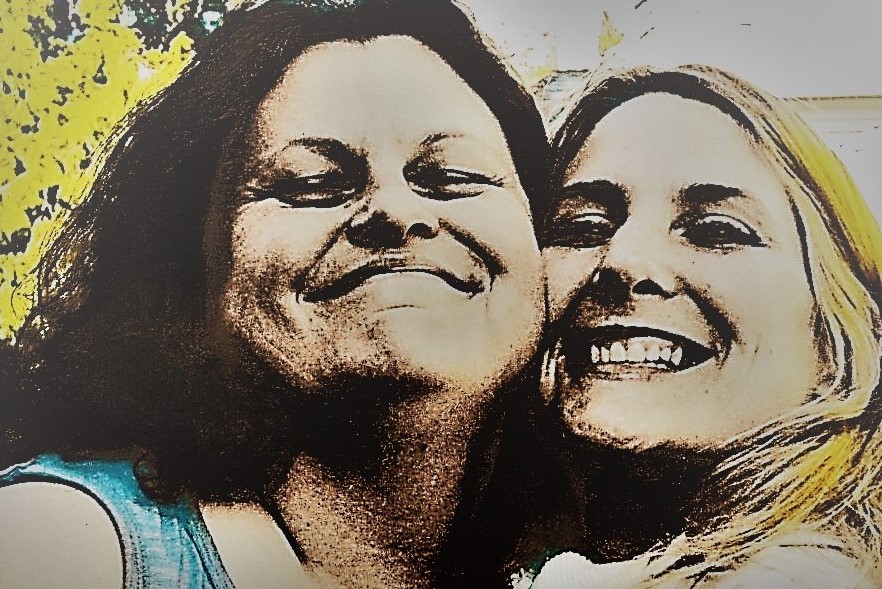
My daughter Suzanne, our dear friend, Mary Anne

I’m a tax preparer. Some would say an apt profession for a person on the autism spectrum.  Working alone, dealing with numbers and calculations, facts and figures.  A skill that requires tremendous concentration and an ability to survey the financial landscape; see the complexities that lie within it.

My daughter, Sue, owns the firm.  She has been keeping books and doing taxes since her late teens. Some of the customers have been loyal to her for more than thirty years.

She is a great boss.  Firm but kind.  She is not autistic.  She has millions of friends (or so it seems) and is very social.

Growing up in a family divided into two camps (autistic and not), was very difficult for her. 

For all of us.  We each have our scars.  My emotional immaturity did not help.  I was very young when I birthed my three children. That’s the reality, not an excuse.

I was very young…

I ‘m wearing the dark shirt. My cousin is with me and my children.

As an aging autist, I look back on my early years, my children’s formative years, and I wince.  However much I loved them, and I did love them unequivocally, I know my child rearing was not any where near ideal.

I didn’t know how to play, how to have fun, how to make sure they had the emotional and physical supports that they needed. 

All I could do was love them in my own way.  Certainly not nearly enough to give them a solid start in life.

And yet, today, all three children have their own homes, are gainfully employed, have friends and family close to them.

I am on good terms with all of my children.  When we talk, it is with respect and love.

I speak with my employer/daughter every day, and the love she has for me comes through clearly, even if those conversations are mostly business.

We all survived.  We are well.  And I am so grateful, because I know I do not deserve this beautiful outcome. 

Tagged , , , ,

Autism and Life Beyond the Herd

This above all: to thine own self be true, And it must follow, as the night the day, Thou canst not then be false to any man*. 

You may often hear or read this quote: the epitome of self-awareness. As someone on the Autism Spectrum, it registers with me. It must be so for many people now and also throughout the ages since Shakespeare’s time, because it is often quoted.

And yet, it is commonly known that humans are born with the herd instinct.

For instance, in Chapter nine of Atomic Habits, James clear states that the human brain is programmed with the desire to be like everybody else. 

This need originates in a protective instinct which triggers the drive to be included–The aptly named ‘herd instinct’. To belong, to imitate the successful integrative and admired behaviours of others, to go along with behaviours we might secretly deplore, stems from our earliest prehistory.

As cave dwellers, and tribesmen, living within the group we were protected, we could benefit from shared resources.  On our own, alone, banished, or ostracized, we became easy targets for wild animals, other tribes, disease and injury. Vulnerable.  Miserable. Usually prey. Ultimately dead.

Safety was an overwhelming issue. As for procreation, the presence of at least one other person was required. Then there’s the bonus of shared resources as well as shared responsibilities. Going along with the prevailing group meant not only survival but a more desirable quality of life.

Theoretically our habits and behaviours are influenced by the culture in which we are born, raised and which we enter into as adults. 

Scientifically we are told that our brains are programmed to want to be aligned with the position assumed by the majority, and the powerful.

Research has proven time and again that being smart, being right, being true to yourself is less important than aligning oneself with the prevailing opinion.  This is ingrained in our being. Man is mentally programmed to respond in this manner.

I realized as I read this that, surprisingly, I had never wanted to be like everyone else.  In my memoir “Unforgiving” I explained that while my teenaged peers wanted to be different, they only really wanted to be different from their parents–not from each other. As for me:

I wanted to be the one and only Margaret Jean on the planet, and I wanted to be indelibly stamped as that single original sample of humanity whose Margaret Jean-ness would permeate every cell of her body and shine through everything she did.

That led me to think about other autistic people, in my family and in my friendships and acquaintances. Many of them have expressed the same feeling: Yes, we want to be accepted.  Yes, we want to be understood.  And no, we do not want to be like everybody else.

We value our uniqueness, the different way we perceive situations and people. Our evaluation of events and information. For instance, what if Temple Grandin had given in to everyone else’s concept of the behaviour of cattle, ignoring her insights as to their behaviours?  What if she had not had the courage to pursue the possibility of uniqueness in her brain?

We shouldn’t feel apologetic for being autistic.  It is how we were born, who we are.

I may misunderstand some social situations, but I may also have a deeper understanding of some.  I may be more intent on social justice than I am on fitting in. Is that really a bad thing? 

Our friends and family want to draw us into the herd for our own protection.  For our own social welfare.  For our own social ease. Admirably, they are thinking of our own good.

But is it what we want? Do we seek permission to be who we intrinsically are?  Do we need it? Those few who make it—how do they do it? By accepting themselves…By being true to who they are.

*Hamlet, act I, scene iii, lines 78–80.

Tagged , , , , , , , , ,

Autism: Criticism and Self Doubt

Inez Garcia 1974

Growing up on the Autism spectrum, being constantly criticized for my behaviour, often justifiably so, created tremendous self-doubt.

This criticism made it easy for people to convince me that behaviour that I felt was entirely appropriate was in fact, unacceptable.

Lately, I’ve read James Clear’s Atomic Habits, in which he states that a habit he has ingrained is that he has to write every day.  He only has to write one line, but the habit he’s ingrained is, he has to write every day.  That, he says, is how he became a writer.

I was born a writer.

In my early teens I wrote poetry, the words flowing from an inner source that moved my pen across the page.  I could easily express emotion and lead my audience to exactly where I wanted to take them. 

People listened attentively and responded with enthusiasm.  For me, it was as natural as breathing.

Then I bound myself into a relationship with a much older man.  A well-educated man who had studied the classics and philosophy. A man raised in an atmosphere of Emily Post’s Blue Book of Etiquette. A man who denigrated my writing.

One day, in a passionate sense of injustice I wrote poetically about an incident that I heard about in the news. 

The news article featured a woman of strong character–Inez Garcia. A woman who was raped. Two men assaulted her, one of whom weighed over three hundred pounds.  He held her down, while the other man raped her.  When they were done, they let her go.  Threats against her life were uttered.  Incensed and traumatized, she went home. She grabbed her son’s gun. She hunted one man down. Shot and killed him. The other man fled. 

I wrote the ballad in her defense when she was arrested and charged with first degree murder.

My husband was shocked. It was 1974 and the very thought that I would dare to write about rape–a forbidden subject—offended him.  That I could even consider defending the woman he found despicable.  The thought of me submitting the ballad to any publication appalled him.  He told me to burn it.

At the time, Women’s Rights and the Chicano Movement were gaining ground in the San Francisco Bay area.  When news of Garcia’s plight became known, feminists took up her cause, and Garcia herself became a speaker addressing women’s groups.

According to Wikipedia, I was not the only woman to take up the pen in Garcia’s defense.

As a cause celebre, her (Inez Garcia’s) case inspired numerous works of art and music, including the Beverly Grant folk song “Inez”, performed with the group The Human Condition; Marge Piercy’s poem “For Inez Garcia”;[5] and Jayne Cortez’s poem “Rape.”[6]

These women became noted for their work in Garcia’s defense and went on to become well published writers.

As for me, I didn’t burn my ballad, but I did essentially fold up my writing persona and immerse myself in motherhood and housekeeping.

That I gave up writing at that point in my life was not my husband’s fault.  It was entirely mine, for giving his opinion so much weight, and my own so little recognition.

Years later and in a more progressive relationship, I entered a university undergraduate program where I studied literature, including contemporary poetry. Writing that I found surprisingly reminiscent of my early work. 

And by degrees I learned to trust myself to write again, encouraged by professors who recognized my latent talent and helped me publish.

But the process is not the same. It’s a constant battle to put my writing first, to allow myself to sit down and open that channel. 

This is my continued fascination with Atomic Habits:  sooner or later the habit of sitting down to write will be ingrained, and I will once again, see myself as a writer.

If you are having self-doubts, if you feel that what you believe is worthwhile is being negated by everyone around you, don’t give up and please, don’t give in. 

Trust yourself, and find your place in this world.  It’s waiting for you.

Inez Garcia was retried and exonerated after serving two years in prison.

https://en.wikipedia.org/wiki/Inez_Garc%C3%ADa  Research data’

Tagged , , , , , ,

Navigating Relationships: Insights from Autism and Philosophy

Growing up on the autism spectrum, I never understood power in personal relationships.  I naively assumed that as adults, people would just naturally treat each other with respect and acceptance. 

People would want what was best for themselves and for the other person.

And in the workplace that would translate to balancing out the needs of the client, with the efficiency and profitability of the firm, while developing processes which would enable workers to do the best possible job with efficiency, pride and productivity.  For a fair wage.

Once I found myself in the ‘real’ world, I had no idea how to navigate the stresses and anxieties of very different personalities malfunctioning together in the work place.

I once complained to my sister that in the personal relationship I was then immersed in, I was the only powerless person.  I was sobbing.  Her response was straightforward:  You have the power, Marg.  You just don’t use it.

The truth? I didn’t know how.

I’ve learned to hold my own since then.  And recently I’ve found two books that clearly speak to this issue. It’s a relief to find authors who clarify the critical aspects of successfully managing stressful interpersonal relationships. 

Because we all find ourselves in situations that require working with or being with other people. 

Situations like Life.

Ichiro Kishimi and Fumitake Koga, two Japanese authors, explore the emotional fallout that can result from coming into contact with ‘the real world’. In their book, The Courage to be Disliked they discuss the calming effects of accepting and embracing who you are.

This book does not even mention autism spectrum disorder. 

Instead, the authors talk about our response to people and situations, and how we can find contentment regardless of what others may think about who we are and what we choose to do.

The format Koga and Kishimi chose for the book is loosely based on Plato’s dialogues.  That is, it’s a plain-language conversation between a philosopher and a young man, revealing the philosophical or Adlerian keys to being true to yourself.

I enjoyed the back and forth discussion; the young man constantly challenging the concepts and ideas put forth by the philosopher.

The discussions  explore the acknowledgement that others are not always going to be aligned with your personality and goals.  In short, they examine how a person can best move forward regardless of the opinions and/or criticisms of others.

Kishimi and Koga discuss our concern about what others might think—and note that this is different from caring about others—and how that emotional involvement with what others think about us, can hinder progress toward being our best self.

It’s a clear philosophical foundation for living your life freed from the inhibiting power of what other people think.

Along the same lines, but much more in the vein of a self-help revelation is The Let Them Theory by Mel Robbins. 

Robbins covers topics from achieving your goals to making, maintaining and letting go of friendships.  Her premise is simple: Do people shun you?  Let them. Do others criticize you?  Let them.  Do they do things you would never do?  Let them.  Let go of critical judgements, critical of yourself and of others.

The letting go is only the first step.  Robbins is clear that two steps are needed for this theory to work in an emotionally healthy way. The second step is, after acknowledging the issue that makes you think, “Let them”, you will then go on to explore self-validation in a way that is satisfying to you.

Her delivery, far from being philosophical, is very personal and direct. 

As spectrum riders, we can mourn our social/political/employment situation, or lack thereof, to our heart’s content. But at some point, we have to pick up our tents and move into the real world.  And hopefully?  Make a difference, however small.

Yours truly,

Margaret Jean.

Tagged , , , , , , ,

This is How They Talk About Us…

The current image has no alternative text. The file name is: mjzeke-6.jpg

I thought it would be interesting to see what various individuals, professionals and non, have to say about us. Here is what I found:

Medical Institutions and Programs tend to view us from a broad neurological or developmental perspective. The word ‘disability’ is regrettably brought into play by the CDC.

National Institute of Mental Health:  Autism spectrum disorder is a neurological and developmental disorder that affects how people interact with others, communicate, learn, and behave.

Centres for Disease Control and Prevention (CDC): Autism Spectrum Disorder (ASD) is a developmental disability that can cause significant social, communication and behavioral challenges.

Other institutes and services see us as having a condition, needing support. But then doesn’t everyone need support? Friends, family, therapists even?

Cleveland Clinic: Autism is a condition that affects how your child socializes and behaves. Early signs include limited eye contact and body language and repetitive motions …

National Health Services, UK: Autism is different for everyone. Autism is a spectrum. This means everybody with autism is different. Some autistic people need little or no support. Others …

Reading from Wikipedia, I wonder if we are neurodevelopmentally disordered, or if perhaps it’s everybody else? “Persistent deficits” seems a rather unhelpful terminology.

Wikipedia:  Autism spectrum disorder (ASD), or simply autism, is a neurodevelopmental disorder “characterized by persistent deficits in social communication…”

And then we come to the researchers–finally, a ray of hope!

Bright Autism: “The future of autism research is not just about finding a cure, but about understanding and embracing the diversity of the human brain.”

Psychology Today, May 13, 2024 : Autistic people may be more likely to voice concerns when made aware of inefficient processes and dysfunctional practices in the workplace than non-autistic…https://www.psychologytoday.com/ca/blog/women-with-autism-spectrum-disorder/202404/are-autistic-people-more-likely-to-speak-up-at-work

This last quote looks interesting. Well worth following up in a future blog.

What have you heard about autism? And how does it affect you? Does what other people say affect you? I know a book that can help you with that: The Courage to be Disliked by Ichiro Kishimi and Fumitake Koga. But that’s another blog altogether.

And how do we prefer to be described? A UK study gave the following results:

Sage Journals: On the preferred language to describe individuals on the spectrum: The term ‘autistic’ was endorsed by a large percentage of autistic adults, family members/friends and parents but by considerably fewer professionals; ‘person with autism’ was endorsed by almost half of professionals but by fewer autistic adults and parents.https://journals.sagepub.com/doi/abs/10.1177/1362361315588200

And finally, two riders of the spectrum address the issue:

Jordan Hilkowitz Autistic Canadian CSI: “Autism is not a tragedy. Running out of bacon is a tragedy.”

Alexandra Forshaw: “Autism is not a disease. Don’t try to cure us. Try to understand us.”

Yours truly,

Margaret Jean

Tagged , , , , ,

Understanding Empathy in Autism: A Personal Reflection

How often have you read or been told that people on the spectrum have no empathy?  In my case, I can’t think of anything further from the truth!

When we were little, my older brother and I were mischievous.  Our grandfather had a beautiful vegetable and rose garden.  Manicured green lawns edged the rows of peas, cucumbers, green beans, tomatoes and root vegetables.  One day, when I was about four years old, and my brother seven, we found ourselves alone in the garden. 

My brother looked carefully around.  Then he looked at me.  Then we both looked at the fat pea pods hanging on the vines.  Before long, we had eaten quite a few, stripping the fat peas from the pods.  I picked a small cucumber when we left.  I planned to eat it later with salt from the kitchen.

With the empty pea pods hanging on the vines, it wasn’t long before the adults discovered what we’d been up to.

My brother got blamed.  He was older than me, and he was supposed to be a role model for me, not a leader in crime.  He got a whopping.

From behind the closed doors, I could hear Dad spanking my brother.  My father was a big man and my brother was a small boy.  My dad was not a gentle person, especially not when he was in a temper. 

In the next room, hearing my brother’s yelps of pain, I cried.  I cried not because I was scared, but because I was sorry for my brother.  I didn’t want my adored big brother to be hurt or humiliated and I was witnessing both.  I felt how cruel and unfair it was, for such a big man to be hurting such a little boy. I sobbed as if my heart would break for him. 

So I know for a fact that I have a solid cache of empathy in my Asperger’s heart.

Perhaps ‘flat aspect’ plays a part in how I am perceived.  I may feel very sympathetic, but my face is void of expression and emotion.   

Do you, as I do, find it embarrassing and irritating when people get annoyed with you for not responding to something they have said?  They want a reaction, and they want it now–in a time frame and a manner that they anticipate. What they term ‘normal’.

When someone tells me a story, or confides in me about an incident, I have learned to remain expressionless, while I am processing what they have said.

I may be very empathetic with the opinion or situation.  But I know all too well that my ‘take’ on the situation is probably not acceptable.

This reminds me of what Heather is quoted as saying in Chapter 14 of Spectrum Women, that she finds she experiences things differently from other people.  Yes, we do have a unique way of processing input.

While I’m thinking deeply about what  someone has just said, I’m processing the information internally. But the person I’m conversing with is looking for an immediate, recognizable verbal or visual response.

My momentary hesitation does not mean that I have no empathy or sympathy for the person or situation. Nevertheless, that is how my apparent lack of immediate response is taken. 

On the other hand, if I do bravely venture my unedited opinion, the other person is likely to express surprise, dismay or even disbelief.  So, I find it’s better to just say something neutral and polite.

And because I have been told so often that whatever opinion, emotion or response I might express is inappropriate, I will sometimes not only not speak my mind, but also mask my facial response.

This would almost certainly lead people to think I am uninterested in the conversation.   

Why do people think we lack empathy? For myself, I think flat aspect and internalizing my perceptions may well account for this result. Inside, I may be roiling with emotion. Outwardly, I seem detached. Am I the only one?

Tagged , ,

The Rosie Series: A Great Read for Spectrum Riders & Their Significant Others.

Has AI deliberately misspelled titles and author name?
Has AI misspelled titles and author name to avoid copyright issues?

The Rosie Books: The Rosie Project: 2013, The Rosie Effect: 2014, The Rosie Result: 2019

Graeme Simsion does not claim his series of funny, sensitive books featuring his character, Don Tillman, is about someone with Asperger’s or anyone who finds themselves on the spectrum.  But it is.  My partner read it, and he said that Graeme Simsion writes like I think.  I state my case.

One of the reviewers is quoted as saying “Sometimes you just need a smart love story that will make anyone, man or woman, laugh out loud.”  Reading that you might think that Simsion is making fun of us non-neurotypicals.  But he is honestly not. 

I laughed a lot when I read this book, and I know some of that came from the situations the author put our protagonist (Don) in, and Don’s response to them, but another aspect that made me laugh out loud was the joy of recognition. 

It’s comforting to know that Simsion could take our predicament and in the bright light of day, show the world with humour and tenderness what it’s like to be us.

Throughout these books, I recognized aspects of my grandsons, my daughter and myself. We share some characteristics, but each have put our own personal stamp on the spectrum label, as has every other Aspie.

My partner, who is not on the spectrum, on reading the Rosie Effect, had great admiration for Don (the main character).  “Here is this guy with severe social deficits, doing everything he can to correct them,” he told me when he finished reading the book.  “The guy knows he’s limited and he works in every conceivable way to change that.”

If only to acquaint ourselves with that attitude, and to enjoy a humorous look at what it is to be ‘us’ in social situations, this book truly is a must read.

Tagged , , , , , ,

Navigating the Autism Spectrum: Resources for Families and Individuals

An internet search reveals many resources, based on expertise and experience, for both spectrum dwellers and their families. I’ve found a number of researchers, doctors, psychiatrists who focus on autism, as well as parents and siblings of people with autism who have spoken or written about their experiences. And perhaps most of all, I appreciate the people who live their lives publicly riding the spectrum.

Where did my help come from?  Like many others, my help came from my family.  But not my parents. When I was growing up no information was available about children born on the high-functioning end of the spectrum. I was erratically school smart. And socially a constant and predictable embarrassment.

I talked too loud.  I talked too much.  I talked about weird things—like poetry or plays or Shakespeare. I failed Maths and Science but my essay on MacBeth (13 pages) was put in the reference section of the school library. 

My parents found me an embarrassingly unmanageable conundrum. It was my daughter who first understood the role autism played in our lives.

Fortunately, today there are many resources available to families and autists alike.

There are parents who write books sharing their insights, like Ellen Notbohm, author of Ten Things Every Child with Autism Wishes You Knew.

Researchers like Chloe Silverman, author of Understanding Autism, Parents, Doctors, and the History of a Disorder, trace the significant influence of parental advocacy in adjustments to treatment approaches.

And people on the spectrum like Temple Grandin who have boldly lived as they were born to live—unabashedly honest and talented, and faced the world with their truths.

We can read John Elder Robison’s advice in Be Different, or learn about his experiences with transcranial magnetic stimulation in Switched On.  

We can listen to Ted Talks by Temple Grandin about the positive aspects of the autistic brain, or hear Kate Kahle and Ethan Lisi relate that autism is a difference, not a disorder.

We can read shared stories by women about their relationships, parenting, and navigating the workplace in  Spectrum Women, or watch a variety of filmic portrayals of non-neurotypical life on TV.

These shared experiences open the possibility for self-acceptance and personal growth. It’s a feast. An intellectual and experiential banquet. And we are all invited.

Tagged , , , , , , ,

Embracing Neurodiversity on Valentine’s Day

On Valentine’s Day let’s ditch the negatives of being a Spectrum personality. Let’s remind ourselves that more and more, people are realizing the positive aspects of neurodiversity. This can generate a more understanding response when we experience anxiety in social situations. I see a positive shift in public perspective regarding those of us who process information differently.

For instance, more and more TV shows and movies are featuring characters with neurologically diverse traits. Some individuals on the spectrum are being hailed as best selling authors and speakers. This signals an interest in and acceptance of neurological diversity which has not been seen before.

Sometimes scenes on the big screen can help us see ourselves more clearly. Take the intro of Monk for instance. When the detective goes back to straighten the umbrellas hanging on the wall, my partner always says, “That’s me!”

When Monk is facing an uncomfortable social situation, my heart beats faster and my palms sweat. Oddly enough, I don’t feel nearly as anxious when he’s cornered by a bad guy!

That series, Monk, was first aired in 2002 and ran for 8 seasons. For three years, the show held the record for the largest viewing audience after it aired the final episode. This illustrates the incredible popularity of the show.

There are a few TV series now featuring the concept of someone on the spectrum. After Monk came The Big Bang Theory in September of 2007. This series is about two geeky physicists who share an apartment. It’s not only Aspies who enjoy and appreciate the Big Bang. Over twelve seasons, the series consistently ranked in the top ten in their category, placing first in their eleventh season. Over the years, the series won awards for comedy, writing, and acting.

Since then a few series have sprung up, including the Korean Legal series Extraordinary Attorney Woo. It’s well worth turning on the closed captioning for this one. The main character displays autistic characteristics and verbally expresses her needs and idiosyncrasies.

When I’m watching this show, I often find myself thinking, “Yes! That’s exactly how I feel!”

If you’ve never heard of Extraordinary Attorney Woo, you can watch the trailer here: https://www.imdb.com/video/vi3256992281/?playlistId=tt20869502&ref_=vp_rv_ap_0

Here’s another resource. The Autism Research Institute website will direct you to their list of the top 36 movies and TV shows featuring autism.

Want more variety? Me, too. I’m sure there are other shows and books that I’m not aware of. I’d like to hear about your favorite TV show, book or movie that involves autism.

It’s Valentine’s Day: a day to celebrate our unique qualities. A day to enjoy the current, more positive media representations of neurodiversity. A day to give ourselves the gift of loving acceptance.

Tagged , , ,

A Work In Progress

Making the Body/Mind Connection Part 3

I am trying hard to follow my own advice and be more mindful, but too often, I find that I am not. 

I find myself preoccupied with work problems and issues.  It’s high season for my seasonal work, and the demands on me are almost unbearably heavy right now.

I do not wish for my days to be entirely consumed with work. There is so much more that I want to do!

I live on the usually rainy west coast of BC, but when it is unseasonably sunny out, I need to bask in that sun for at least half an hour, just to remind myself that there’s a rewarding and joyful life available and waiting for me.

I like to both read and least listen to books, but I am reduced to only listening to audio books in the car on my way to the gym.

 Lately, I find I am not even making time to phone and chat with my friends or keep in touch with my distant cousins and relatives, some of whom count on me for support and encouragement.

I am incredibly fortunate in that I have a caring partner who plans and prepares our meals, and takes care of the light housekeeping and gardening. 

So really, my complaint, when I stop to think about it, is not about my situation, it’s about how I am dealing with it, which is a result of what’s going on in my head.

This reminds me of an article I once read, by an esteemed author named Ekhart Tolle.  He said something that really caught my interest.

He said our minds are busy clogging up our thoughts with the past and the future. This keeps us from noticing and fully living the possibilities and the pleasure of the moment we are in. 

Tolle believes that even when we feel that being in the present moment is painful, unpleasant or even unacceptable, that feeling is a judgement we are making about that moment. And just thinking in those terms, Tolle warns us, works against our best interests. 

These assessments of our situation are pronounced as unalterable facts by our mind, and Tolle posits that it is this judgement which causes us pain and unhappiness.

Tolle’s wise advice?   “Whatever the present moment brings, accept it as if you had chosen it.”  He cautions us to always work with the present and never against it. 

“Make the present moment your friend and not your enemy, and you will transform your life.”

This advice sounds powerful. Also very difficult to initiate and sustain.

Reflecting on this article, which I’ve found in my files, I realize that accepting the reality of the present moment requires practice. 

To do so without adding mental predictions of where it is taking me, or how it has affected me, or labelling it a positive or negative moment, to simply accept the moment whatever it may bring, could be the next step in my journey to mindfulness.

I must learn to live in the present moment.  To recognize what I am doing.  To be fully cognizant of my immediate situation, my environment and my body, as I am moving into the next moment.  And that the next moment is always an unknown.

I am working on it.

Tagged

United We Stand, Divided We….

Exploring the Mind/Body Connection Part 2

I am grateful to my body for all the years it has amazingly, carried me through this life. In elementary school, it helped me win races and high jump and in high school, allowed me to participate in team sports like baseball and basketball. I could act in film and on stage. I could walk for miles and often had to.  This body bore me three fine children.  And in the confines of this body, I cared for a husband with a critical heart condition. 

But ultimately, I never thought much about the physical embodiment that accompanied ‘me’ wherever I went. I stumbled, tripped, rushed, and blundered.

Alternately, I would sit for hours in an unhealthy position, lost in a book or a problem or a project.  My body was just there with me, taken for granted, unnoticed, like an unloved child in the room.

The most positive remark I can make about my attitude toward my body is that I have always been aware that mobility is crucial to a vibrant and happy life. So, this project of honouring my physical self should be a simple matter, right?

The trouble is my mind seems to be jealous.

Just when I think I’m doing well with regular breaks from the computer for movement and stretching, or going to the gym, my mind steps in and takes over, completely absorbing me for hours beyond the time I have allotted it, and once again robbing my body of its due.

Why do I live so much in my head?  Why are my thoughts a constant flow of unremitting playback and commentary? 

Why can I not enjoy a mental silence now and then?  A cessation of mental chatter, a period of serenity which would allow me to breathe more deeply, to drink in the moment, the bright purple and yellow of the primulas outside my window, the hummingbirds hovering at the feeder, the snow on the roofs across the way.

Suddenly, it becomes clear: to give my body its due, I must be able to exert some control over my mind.

My friend, Richard, an expert in mindfulness tells me it will take a conscious effort to co-ordinate my body and mind. It’s a matter of giving my physicality the mindful recognition it deserves. And treating it respectfully. 

Richard says I must learn to be still: to extricate myself from this mental rat race in which I seem perpetually absorbed.

I must deliberately engage both body and mind, he tells me, not only when motion is involved but also when it’s time to be still!

He says there is a way to harmoniously reunite my mind with my body. That I must recognize that there are no grounds for perceiving these aspects of myself as a duality. But this body/mind division seems so real to me. If he’s right, I’m not dealing with two separate entities, body and mind are intimately connected. It seems they just don’t recognize each other now.

I must introduce my body and my mind to each other.

I’m going to ask Richard to tell me more about this. What does recognizing the oneness of my body and mind look like in everyday life?  How do I practice this kind of unity? Does anyone else feel this disconnect–this separation of these two aspects of self? How do we reconnect, assuming the connection existed in the first place?

Come join me in my exploration of the mind/body connection!

Tagged , , , , , ,

Making the Body-Mind Connection

All my life I’ve dragged my body around behind my mind. 

I’d be sitting at the computer and suddenly think of a resource I needed from another room, or something cooking on the stove that needed tending.  And I don’t quite know how to explain this, but my mind would just start going over there.

And my body would be like “Wait for me!” as I blundered out of my chair, nearly knocking it over, possibly tripping on something, my head and shoulders bent forward, my mind literally pulling me to whatever destination I had in mind. 

I did not ever first think about what I wanted, giving my body time to collect itself and rise with dignity and move gracefully to that place.

I was a human version of a train wreck.

When I sat, hunched over my desk, leaning into my computer, my book, or my sewing.  my posture suffered. My breathing and bodily functions were affected by the scrunching up of lungs and organs.

When I ate, I inhaled my food as if I had an agenda and I was already late. 

I did not have the grace to eat slowly, to make conversation with my husband, to comment on the tastes, smells and textures of the food, the care taken with the table setting, or any other aspect of the time and effort that went into the preparation and presentation of the meal. 

As if devoid of all sensory perception and completely lacking in graceful manners, I ate, immediately got up from the table, cleared the dishes and washed and dried them.

My husband, who not only cooks fabulous meals, but believes in candlelight, tablecloths and flowers as normal dinner table settings, was left sitting alone in his chair,

As a young girl it had been drilled into me that a clean kitchen was the hallmark of a good wife and mother, and since I had so much to do, the sooner it was cleaned up, the better. Right?

Lately, I have made a substantial effort to change.  I have decided, late as it is in my life, to acknowledge my body as a vital, omnipresent part of me, and to give it due time and attention.  But how?  After a lifetime of neglect, it’s going to take a big rethink.    

Tagged ,

Sheila’s Story:

Positive Effects of Neuro-divergent Thinking.

In this series of blogs, we are looking at the innovative approach and empathic attitude that Sheila, a Certified Educational Assistant who is on the spectrum, brings to teaching in her classroom.

In the previous blog, she taught her learning-challenged student to do math using a line-drawing on the schoolground.  For the first time in four years of schooling, the student was able to correctly complete a math worksheet on her own, working from the school yard line drawing.  Sheila’s challenge now is to translate that ability into a process that will work in the classroom.  The story continues in her own words.

I copied a number line onto a piece of paper, thinking she could use a marker to count up the lines.

It was a complete disaster. She did not seem to understand any part of it.

“Don’t worry” I told her, “This is not your problem. I’m going to figure out something different and we’ll try again tomorrow.”

The only thing I could think of was that the number line was the traditional horizontal line that most students use. I converted it to a vertical number line, and she was able to use it without a problem.

After a week of using the vertical number line successfully, I brought out the horizontal one and we talked about it. Eventually she was able to transfer what she had learned on the vertical line and successfully apply it to the horizontal line.

Through the repetitive use of the number line, she learned how the numbers in addition and subtraction related to each other. This led to her ability to transfer that information so that she was able to add and subtract using her fingers.

Progress has been slow but steady and she can now add or subtract any two lines of numbers. She can also multiply any number by another one digit number.

 In my work I seek information, materials or support from anyone I deem helpful. Speech therapists are sometimes required. In other situations, kindergarten and grade one teachers who are willing to share resources they have used to help much younger children learn, are invaluable assets.

I sometimes have to invent materials when new approaches are required.  As a result, I’ve become increasingly adept at designing and writing new programs for these students.

Some colleagues wonder why my classrooms are always quiet.  I tell them: “The students work hard to finish their assignments because they know when they finish, I always have a five minute ‘free time’ activity prepared for them.  It’s a fun thing we like to do at the end of the class.

I stay with the students during their fun time and we talk about the game or activity they’re doing, along with their work and how their day went. I always know what my students are thinking about their work, because they talk to me.”

Sheila’s early experiences as a single mom on government assistance with a high-functioning autistic child, combined with her natural ability, compassion and authoritative presence led her to a career as an Educational Assistant. 

But it is Sheila’s neuro-divergent thinking which enables her to explore unusual avenues, facilitating successful outcomes for her challenged students.

“My desire for these students is always first and foremost, Success!” Sheila says, “I want them to experience success, and I’m going to bring everything to the table, everything I’ve got to help make that happen.”

Tagged , , , , , , ,

Innovative Approaches to Learning Disabilities.

Positive Aspects: Sheila’s Story continued.

This blog continues the story of Sheila, a Certified Educational Assistant. Because of her own autism and that of her son, along with the challenges her son faced in his early schooling, Sheila is empathetic and highly motivated to find individualized solutions for her students.  In this instance, she was working with a grade four female student who is unable to correctly add single digit numbers up to twenty without support. The story continues in Sheila’s own words:

I knew that teachers had tried picture math sheets, number lines, counting strips, base ten blocks, primary abacus, counters, ten frames, rote drills and more, all to no avail.

What else could there be? I turned it all over in my mind for about a day. What did the majority of these methods have in common? The answer – they used fine motor skills. What was the opposite of fine motor skills? Gross motor skills.

Walking, running, skipping, jumping, hopping are all examples of movements which use gross motor skills. How could I effectively apply that to addition?

My initial goal was for her to be able to complete a simple worksheet adding numbers to a sum no higher than 20 with 90% accuracy.

Hopping, jumping and skipping would become tiring very quickly and were not really compatible with a worksheet.

Walking seemed the most reasonable. I envisioned walking a number line with numbers up to 20 spaced a comfortable step apart.

This was going to take up a lot of room. Outside had the most space, but the weather was pretty wet so I found a section of the wall under the eaves that had no windows.

The number line was drawn in chalk and looked like a ladder with one side taken off. Numbers from 0 to 20 were written beside each rung.

Once the student had been shown the number line and what it represented, I had to teach her how to use it. I began with an equation my student already knew.

I asked her to stand at the bottom of the ladder on the “0” rung and said,

“We are going to add 1 + 1. So take a step to the line with the number 1.” She did. “Good”, I said, “Now, we are adding one more so we need to take one more step. Take a step to the next line. Good. Look at the number beside the line you’re standing on. What is it?”

“Two” she responded.

“What is 1+1?” I asked her.

“Two,” she quickly replied.

“Right! And what is the number beside the line you’re standing on?”

She looked down at the number then back at me and thoughtfully answered, “Two.”

We then repeated the procedure using 1+2, with the additional information that we always start at the largest number in the equation.

The next day, I made two copies of a worksheet and gave the student one on a clipboard with a pencil. I verbalized the process for each equation and the student carried out the instructions.

In the following days, little by little, I had the student verbalize the process until she could do it independently.

Although this task seems simple, there are multiple facets.

  1. Finding the equation on the page, remembering you need to look at the largest number first,
  2. Determining what is the largest number,
  3. Finding the number on the line and then standing on it,
  4. Referring to the equation on the page to see what number you’re adding,
  5. Walking the correct number of lines,
  6. Finding the number on the line you’re on,
  7. Remembering the number while once again locating the equation so you can then write it down.

My student enjoyed this process and she worked hard.

I remember the first time she did the worksheet independently. I sent her out while I stayed in to work on a trumped-up task.

I reflected back to when I first read the file on her, to how discouraging it must have felt for her to be unable to participate in Maths with the other kids. How she not only couldn’t do it right, she could not do it at all.

And now, without any help from me or her peers, she was out there doing it!

What amazing success!  But Sheila’s journey with this student was not over yet.  In next week’s blog we learn how Sheila translates this method of learning to a process that will work in the classroom.

Tagged

Positive Aspects: Sheila’s Story continued.

In the previous two blogs, I’ve entertained positive aspects of non-neuro typical thinking, and presented the back story of Sheila, a single mom who found that both she and her young son were on the autism spectrum. This begins the story of the mindset Sheila brings to her work as a teacher’s aide, and the empathic understanding through which she views her students. The following is part three of Sheila’s story, told in her own words.

Once the school finally had the information they needed to support my son, I decided to join the workforce again.  But I needed to find a profession. Teaching was a direction I’d been encouraged to pursue since elementary school and was one which held a very strong appeal. Since the reality was that I had limited financial resources and a special needs son who demanded time and attention, a Certified Educational Assistant (CEA) seemed like a good fit for me and a more reasonable option.  Grants paid for the college and university classes I needed, and I was able to complete the course at a pace that worked for my son.

When I am assigned a student, I am aware that often many aides and teachers have already tried a wide variety of learning tools and resources to support the student’s ability to understand and integrate information or concepts. In other words, to “learn”.

With the groundwork that has already been done there is a lot of information about which approaches have not succeeded, as well as a list of interests, strengths and even passions that the student is able to contribute to the process.

Having studied the file, I turn to the child. I look for patterns of behaviour and sparks of interest and consider how these can be intercepted and guided toward opening new channels of insight and communication.

In one instance, a grade four student was unable to correctly add single digit numbers up to twenty without support. This was something I had never encountered before. After a brief assessment with the student, I saw that she could count past 100 and easily recognize numbers. She knew 1+1=2 and 1+2=3 but did not know what 1+3 equaled.

I thought about this student’s classroom experience, what it would be like to watch your peers work independently and with only a little help, get the right answers. And all you can do is sit there, frustrated and anxious, staring at the numbers, struggling to grasp the process, all the time thinking “I just don’t get it!”

The school was giving me the resources and the opportunity to assist this child, and I was determined to help her. To find the key that would unlock the door to some level of success.

Sheila’s innovative approach and her student’s learning process follow in the next Blog.

Tagged ,

Positive Aspects of Life on the Spectrum: Sheila’s Story.

In this blog series, I am presenting lives that express the ways in which not being Neuro Typical is a career asset.  Thinking outside the box is normal for people on the autism spectrum. In certain circumstances this attribute of our condition can be beneficial. 

To continue Sheila’s story, begun in the previous blog, I will first relate some background information, along with some early practices she implemented. These temporary solutions to her son, Seamus’ social and learning problems ultimately led to her ability to explore unique and innovative methodology, which will be discussed in the next blog in this series. 

Sheila’s school experience was successful both academically and socially. However, later circumstances rendered her a single mom on welfare with an autistic child, Seamus.

As a result, Sheila experienced the understanding of how frustrating life can be for both parent and child, when someone is trying their best, socially and academically, and yet, is largely unsuccessful at one or both.

Seamus was a loving boy, but he found socializing at school impossible. Ostracized and bullied, he could never join in any games, and he had no friends to ‘hang’ with at lunch or recess. Sheila decided to see how she could help.

Every lunch hour she joined Seamus on the playground. Standing with him, she would ask, “Who wants to play baseball?” Invariably several children would crowd around.  “Alright,” she’d say, “There’s only one rule, and that is, Seamus gets to play.”

The ‘Seamus ball game’ soon became a popular lunch time activity! Sheila would also stay later on occasion to help in the classroom if Seamus was having a problem with the work. Her organized approach, ability to quickly assess a situation through Seamus’ eyes and her friendly but authoritative air made her an asset in the classroom.

In the late 1990’s, not a lot was known about the autism spectrum, especially the high end kids who seemed to have no trouble learning but couldn’t manage their social life. After countless incomplete diagnoses, from leaky gut to ADD and ADHD, Sheila felt at a loss. She didn’t like the effect of the medications prescribed for her son, and he didn’t either, often refusing to take them.

One day, after attending a conference on autism, a teacher from Seamus’ school phoned Sheila.   I think I know what Seamus has, she told Sheila. When given a list of the symptomatic behaviours, Sheila recognized to her surprise, that it was not only Seamus who was on the spectrum–she was on the spectrum, too! This self-knowledge opened up a wide range of concerns and possibilities for both Sheila and her son.

In her book, Aspergirls, Rudy Simone states that for adults, being diagnosed can be a relief. A diagnosis for a child can also bring relief for parents like Sheila, who until Seamus’ diagnosis did not know where to turn for helpful information. In the years before Sheila was diagnosed, her focus was on helping Seamus.

Little was known about how to help those on the high end of the spectrum, then known as Asperger’s. With the help of his school staff, his family doctor, and Sheila’s campaigning, Seamus was able to access a facility for testing.  Once he was diagnosed, funding became available for special programs and activities for him. 

Every dime had to be accounted for, and it could only be spent on the special needs or activities for him, Sheila recalls.

Sheila’s experience with her son provided her insight into similar situations. She understands the frustration of having a child who neither learns nor interacts in the same way as their peers. She has gained the power of finding those keys which open doors for students who feel stymied by the different ways their brain works.

Success is what these kids need to experience. Sheila tells me, referring to both behavioural and learning issues. Helping her students find the self-confidence that will allow for success, is the motivating factor in her work.

Tagged , , , , , , , ,

A Positive Aspect of Life on the Spectrum.

I’d like to further explore that position in this blog.  

Being on the spectrum has the advantage of enabling us to see events from a focused, objective perspective, one which is devoid of much of the emotional, social ‘baggage’ which often burden neural typicals.

From this distinctive, intellectually isolated position, we are able to recognize the ‘essence’ of scientific and political dilemmas which, when no longer ‘wrapped up’ in irrelevant social diplomacy, are much simpler to resolve.

We see significant examples of this in Elon Musk, Greta Thunberg, and Temple Grandin, people whose unique perspectives have promoted both awareness of and possible solutions to critical environmental and industrial challenges currently impacting all of humanity.

If you are on the spectrum, you may wish to consider whether your ‘lack of alignment’ with decisions being made for all of us by neural typical politicians and industrialists is because you are somehow ‘deficient’, or rather because you are better positioned to recognise, isolate and promote workable solutions to complex issues.

There is a difference in the way the human brain processes incoming information in neural typicals vs those on the spectrum. Our uniqueness allows us a different outlook on problems and often, a unique approach to them.  Our lack of emotional or social involvement encourages us to see issues objectively, and therefore to approach solutions rationally. 

 You may wish to discuss this with acquaintances who are also on the spectrum. You may be surprised at how others share both this viewpoint, and the frustration which arises from being marginalized.

 Once you are receptive to the notion of a positive influence resulting from the differing neurological processes, you will find no shortage of examples of the benefits of this unique perspective,

Sheila is one such person who brings a unique talent to her work.

Sheila is an Educational Assistant who, in her 20 year career, has worked with educationally challenged children ranging from kindergarten through high school. 

Early on, her talent for this work was discovered to be exceptional, and subsequently she often finds herself assigned the students with the most serious limitations, ranging from behavioural issues to those with significant brain differences..

In my next blog posting I will explore some specific, unique approaches that Sheila uses with great success.

You will see how, when her autistic mind identifies and isolates problems, successful solutions inevitably follow. You may find that they resonate with you. You may even find them quite fascinating!

Tagged , , , , , ,

Burning Bridges

While everyone finds it difficult to determine who can be trusted, it is especially so for those of us on the spectrum.

We are often unaware of intentions indicated by visual clues like body language, eye movement and facial expression. This inability can make us vulnerable, and too often the brunt of mean spirited, self-serving individuals.   

Others may purposely set us up, taking something they know we said in innocence, or jest, purposely repeating it to others out of context so as to make it sound harmful, cruel or vindictive. At best in the hope of personal gain, or worst, out of pure maliciousness.

In casual conversation with others we may make a sarcastic, but light hearted, innocuous, remark like, “Right! Because we all know Mary is so lazy!  Not!”  Soon the rumour circulating in the office is that you said Mary is lazy. You cannot deny that literally you did say that Mary was lazy, even though you meant to playfully convey the opposite.

Incidents like this are why those of us on the spectrum will often think carefully about what to say before speaking.  This pre-speech ‘pause’ can be misinterpreted by neural typicals as an indication that we are not interested in responding. The fact is we are thinking our way through to a socially appropriate response.  

Who to trust?  We cannot guard our every word. There will always be others who prey upon our ‘differences’ with selfish motives.  

Our best defence is to speak honestly, in a clear, straightforward manner, simply stating our intention.  In this way we can avoid the temptation to overly qualify or clarify what we have said, after the fact.  

It is important to always speak with goodwill.  But it is equally important to be careful about who you engage in conversation.  That person you joked with about Mary?  Future conversations with that individual must be limited to factual information, devoid of social playful banter.

Having difficulty making friends means we will often excuse people’s bad behaviour to keep the ‘friendship’ alive.  But this is setting ourselves up for constant betrayal.

Certain conversational topics are great gateways through which to get to know others. 

General topics, like the weather, TV shows, books, or current events can ease us into a new social relationship. Personally revealing conversation can be ammunition for self-serving bullies.

Save confidences for later, when you have had time to evaluate the trustworthiness of your new friends.

In her book, Aspergirls, Rudy Simone urges those on the spectrum to defend themselves “with tact and strength”.  She further counsels us to be constantly aware of the unpleasant personality traits possessed by certain people in our lives.

If you find yourself ostracized by others as a result of deliberate misinformation spread by an ignorant individual, there is little you can do to defend yourself.

In stressful situations such as these, Simone suggests that you take the ‘high road’, displaying as little overt anger, and as much grace as you can muster, in order to retain your personal integrity and self-respect.

“Remember the three R’s,” she counsels. “References, recommendation, and reputation.” You may need to maintain all three in order to have the life you desire. 

Tagged , , , , , , ,

Aspergirls by Rudy Simone

An Empowering Read for Women on the Autism Spectrum

I appreciate Rudy Simone’s acknowledgement that sometimes our social behaviours result in “botched interactions” causing feelings of guilt and self-blame. We on the spectrum have all had those experiences!

I learned that I was on the spectrum when my grandson was diagnosed. My daughter phoned me, very excited, and added, “And Mom, you and I also have all the symptoms!”

It was a joyful and terrifying moment. Joyful because suddenly there was an explanation for my horrific record of social blunders. Terrifying because it meant that I had been stumbling blindly through school, marriages and child-rearing without the benefit of this knowledge.

The awareness gave me the gift of compassion for myself. As Simone says in Aspergirls, diagnosis comes with a sensation of relief. 

I would like to say that I stopped feeling inadequate in that moment, but like the women in Simone’s book, and as anyone on the spectrum knows, that fear of being found lacking in social situations does not suddenly vanish.

Still, I’ve found that sense of insecurity can sometimes be useful. Feeling uncertain can make me hesitant at times, a caution which allows me to reassess a situation and perhaps even quickly think through and revise my initial instinctive response.

Simone notes that not being diagnosed invites all kinds of speculation, including unflattering and insulting conclusions about what our ‘problem’ is. 

People will often assume that our lack of social propriety is intentional. Or, seeing that we are vulnerable, some folks can’t resist the cruel opportunity to take advantage of our inability to appropriately defend ourselves in social situations, perhaps even to elevate their own social status in the eyes of their peers.

I found Simone’s book reassuring, in that she not only writes about her own experience, but also presents the comments and experiences of other ‘Aspergirls’. 

She covers a wide range of topics, from dating, sex and relationships, including ending those relationships (burning bridges), along with bullying at school, managing employment situations, stimming behaviours and sensory overload. Each chapter contains personal anecdotes, research and information, and ends with advice to Aspergirls and their parents.

Aspergirls is not only informative, it is a book that will make any girl on the autism spectrum feel at home in its pages, which will help parents, siblings and significant others to perhaps see the world from our point of view.

Tagged , , , , , , ,

Viewing Asperger’s through a Different Window.

John Elder Robison, who has Asperger’s, writes prolifically on Autism. He volunteered to undergo an experimental treatment which involved being subjected to magnetic stimulation of targeted areas of his brain.

There have been extensive studies on Asperger’s by neurophysiologists during the past 30 – 40 years. During the past 15 – 20 years, the emphasis has been upon the difference in utilization of the Cerebral cortex and the Amygdala aspect of the Cerebellum between neurotypicals and those on the Autism Spectrum.

These studies reveal how information with an emotional content, especially when personally conveyed, is largely processed in the Cerebral cortex by those with Asperger’s rather than in the Amygdala where it is processed by neurotypicals.

The result is those of us on the autism spectrum process information with emotional content logically, rather than emotionally.

However, the richer the contextual content associated with the information, the greater the ability of Aspies to ‘understand’, even if they cannot ‘directly experience’ the emotion being expressed.

In the experimental treatment in which Robison participated, he didn’t immediately notice any difference.

But the next day, when he interacted with others, he was unexpectedly overwhelmed by an almost ‘psychic’ awareness of their emotions. 

He was assailed by emotions of “jealousy, fear, anger and every bad thing I could imagine” (Neale). It was an unexpected torrent of emotions which he experienced as shocking and distressing.

This situation, one of being admitted to an emotional landscape which is usually unavailable, puts me in mind of Virginia Woolf’s comment in A Room of One’s Own about patriarchal rules in Oxbridge. At the library, she was refused entrance because of being a woman.

In social situations, as a person with autism syndrome, I feel as Woolf did “…how unpleasant it is to be locked out;” (18).  

But when I am composing a poem like Exonerating Eve which expresses such a divergent but powerful viewpoint, then, like Woolf, I cannot help but ponder the alternative, as she did when she added, “… and I thought how it is worse perhaps to be locked in;” (18).

Aspies, such as myself, come to realize early in our lives that we are somehow ‘locked out’. We learn to accept this and to make social inroads where we may.

But Robison’s experience indicates that our lack of social/emotional understanding is a ‘locking out’ that is at least in some respects beneficial, allowing us to experience the world in a way that, while ingenuous, is also unique and  insightful.

And thus I present my poem:

EXONERATING EVE

I know why Eve ate the apple

Picked and tasted forbidden fruit.

Locked in her Eden she hungered for more,

wanted proof that her life would not always be
just wandering the garden, a
 helpmate to Adam,

a servant to God.

In her heart she yearned for more than the beauty,

More than the silence. More than obedience.

Something within called her to challenge

the ‘perfection’ of a life established by God. 

Accepted by Man. 

Did The Creator witness her anguish? Did He
inspire her desire for more?

Gifting free will to all of humanity,

did He await our wakening thrill?

Did He seek a braver companion than one who
obeyed without question or zeal?

Was He astounded when it was the woman,

The feminine one who plucked and then peeled 

The Fruit that triggered a flood of passion
and reason, 
Wherein she
shrugged off obedience
and now saw
her truth?

 Newly aware, she sees in her nudity 

All that is vulnerable and desirable to men. 

Looking out at the garden she sees the reality, 

thorns and thistles suddenly visible.

And within her, awareness of a strong inner spirit,

God-given,
to prepare her for the journey 
that she now begins.

Eve ate the fruit to be free from the fallacy

That her life was perfect. 

She dared to be more than that helpmate.

More than that servant.

To live in a garden that was an Eden no more.

A garden that now she perceives as a jungle.

A garden that asks her spirit to grow. 

A garden with pathways to be forged

and then trodden.

A life posing questions, needing answers,

Revealing wonders, unveiling horrors. A life to be
probed. A will to be tested.

Searching for truth, for reason and passion,

She reaches up, plucks The Fruit from the tree.

And in that critical, wonderful moment,

Plunges mankind into uncertainty, Drawing us
all out of complacency.

 Here in the midst of this pandemic, I understand
a woman like Eve.

As I sit and reflect on the life I’ve created,

I challenge myself to find more of me.

To ask the hard questions, to reach for the truth. 

To find in myself the courage to ask 

the questions that, unanswered leave me unproved.

To reach for the core, the richness of life. Face my own
fears, grapple with and tame them.

While I have time. While I am here, locked in this life Some would
call Paradise.

Yes. I have come to know why Eve ate that apple.

4:53 AM


Tagged ,

Bullied because we’re different: ‘Different’ includes ‘Exceptional”!

In Mexico, a child named Adhara Perez was bullied, called ‘weirdo’ and ‘oddball’.  In one incident, her ‘playmates’ locked her in a playhouse, while taunting her relentlessly for being ‘different’.

These attitudes are all too familiar to children with Asperger’s.

Even as adults, it can seem that the harder we try to fit in socially, the more we subject ourselves to painful disdain when our efforts only exacerbate our difference.

But what about those of us who find acceptance as we are?

The best possible scenario is when a parent or a spouse sees the positive aspects of our ‘syndrome’.  This is what happened with Adhara Perez.

Her mother, witnessing the playhouse incident, vowed that Adhara would never have to suffer such humiliating treatment again.

She consoled Adhara, encouraging her through therapy and subsequent tests which revealed that Adhara actually had an astounding IQ!  That was at the age of four.

Part of her mother’s determination that Adhara should never again be subjected to bullying was the decision to take her out of school, where  bored and depressed, Adhara often slept through her classes. 

After her amazing intellect was discovered, Adhara began studying in a non-traditional manner.  She graduated from high school at age 8, and is currently working on two degrees, Systems Engineering and Industrial Engineering in Mathematics. 

When we consider the lives of children with Asperger’s whose parents have stood by them, we see an illustration of the extraordinary benefits they can bring to the world.

Two women come immediately to mind:  First, Temple Grandin, who has championed the humane treatment of livestock en route to slaughter. As well, Grandin has written scientific treatises on animal behaviour and several books[1] including one about the autistic brain.

Secondly, Greta Thunberg, who has shaken up the world by forcing us towards a greater recognition of the disastrous effects that environmental pollution will have upon both present and future generations.

What does Adhara advise people who find themselves in hateful situations?

Never give up! And if you’re in an intolerable situation you despise? Then formulate concrete plans to move yourself forward into a better situation.

Let’s all do ourselves a great favour by remembering: ‘different’ need not be a negative attribute. It includes those who are gifted with insights which are unavailable to the vast majority of those with normal cognitive function, as the ‘normal’ brain is too often passively unquestioning, and thus unable to visualise, sustain and actualize alternate possibilities. 


[1] Grandin wrote several books, including Emergence: Labeled Autistic (1986; with Margaret M. Scariano), Thinking in Pictures, and Other Reports from My Life with Autism (1995), and The Autistic Brain: Thinking Across the Spectrum (2013; with Richard Panek). Calling All Minds: How to Think and Create Like an Inventor (2018) was for younger readers. She also edited and contributed to the volume Genetics and the Behavior of Domestic Animals (1998).

Tagged , , , , ,

An Adult Aspie Looks at Friendship

Having trouble making friends? For people on the spectrum, this is a common situation. A recent study indicated that of the participants, more than half the children with ASD did not have a single close friend. How does a person learn to live with that?

I have been fortunate to have one or two friends who have remained constant. But mostly? Friends come and go.

My approach to friendship is different from that of people who seem to know all the rules of bonding and building peer relationships.

Occasionally, people come to have some meaningful connection with me, and then, for the most part, sooner or later drift away. And that’s okay because they always leave me emotionally richer, with lessons learned and experiences shared that I would not have otherwise had.

I have let go of my expectations of a life-long friendship when my life intersects with others. If we have no interests in common, or not enough to sustain a typical friendship, that’s ok.

Not forming a lifetime bond with others is not a failure.

I see my role as bringing light into their path just by virtue of being me.  I want to offer them a gift, introducing an upbeat, pleasant moment into their day. I may do this in many ways: with kindness, validation, humour or encouragement.

I see our meeting as a connection, not a life-long commitment.

I believe connecting with someone new occurs at a meaningful time for both of us, and that we are each somehow important in that moment for the other, assisting each other along whatever path we are individually, or jointly, travelling.

It is not for me to judge others, to work to improve the people who come into my life, or to see if we can converse comfortably for hours … although it is always a pleasant surprise when a lengthy, satisfying conversation occurs! 

Actually, shorter connections feel safer for me, I can avoid having to analyse whether what we have discussed or disclosed is really appropriate.

Just a connection that however fleeting, will be rewarding in the moment, and remembered with pleasure.

That’s not so hard to live with!

Tagged , ,

Einstein, Aspies, Outsiders & Creative Enlightenment.

Consider Einstein… We need not be geniuses of Einstein’s calibre in order to appreciate how his divergent thinking led to scientific breakthroughs and facilitated significant social and artistic enlightenment.

Like us Aspies, Einstein loved solitude. Walter Isaacson reports in his biography Einstein, that as a child Einstein would often sit alone, working on puzzles, creating complex structures with his building set or playing with his steam engine.

Max Talmud, a young medical student who visited the Einstein home regularly, reported that he never saw Einstein playing with other boys his age. It seemed that Einstein preferred to think through mathematical problems and theorems, and to ponder the mysteries of nature, in isolation.

As a result of spending so much thoughtful time alone, working through problems that intrigued him, Einstein had an empowering revelation at age twelve. He grasped that through reasoning alone, without the help of any external experience, it was possible to ascertain fundamental truths.

Being an outsider is the very quality which enabled Einstein to posit so many ground-breaking theorems.

His ability to conceive of the operating laws of space, time and gravity were only possible because he had the intellectual range as well as the moral courage to question established scientific ‘truths’ such as Newtonian Law, which hitherto had been the cornerstone of physics.

But, the key to the recognition of his brilliant accomplishments was not only Einstein’s intellect and aloofness. Equally important was sharing his ideas and observations within the existing structure of the scientific community, proposing ways in which his theorems could be tested by others. In this way, his work was honed to perfection.

If he had been working on his theorems alone, with no support from the scientific community, his work would doubtless not be renowned today.

If you have a passion, pursue it! Connect with others who are as interested and creative as yourself.

Sharpen your mind by clearly conceptualizing the ideas which arise from your passion, then share them so they can be explored, tested, appreciated and validated by others.

Be sure you fully understand what you are embracing and promoting.

Einstein had the respect of his peers not because he was popular, (he wasn’t at first), but because he was intelligent, honest and loyal. He developed a close association with two or three intellectuals, and it was through the garnering of their respect and loyalty that his theorems were able to be proven and widely accepted.

While Einstein needed solitude to develop his theories and the proofs which would validate them, he understood that he also needed a broad social network–the entire scientific community. Scientists in England, Holland, Switzerland and Germany helped him prove aspects of his Theory of Relativity.

Likewise, we Aspies need solitude to ponder, define and organize our thought processes, to connect intuitively with compelling ideas and notions which resonate with us.

But we also need the appropriate social network to help us refine, test and ultimately validate our intellectual endeavours.

When his theory of relativity was proven beyond any doubt by a British astronomer in Holland, Einstein merely commented:

The intimate union between the beautiful, the true and the real have again been proved. It is a gift from gracious destiny that I have been allowed to experience this…”

Besides his intellect, Einstein’s two greatest assets were his unique childlike and intuitive curiosity about the universe, and his sense of humility, reflected in his charm and his humour.

Hmmm … perhaps Einstein was an Aspie too …

MJ Adam & RS Warrington

PROMOTING THE AUTISTIC VOICE


Today is Valentine’s Day, a perfect day for Aspies everywhere to give themselves the gift of loving acceptance. 

Today is the day to discover that autists are making waves, promoting our Autistic voices by demanding that research begin to focus on the positive instead of the negative features of autism.  It is a day to recognize those individuals and organizations who are working toward changing the way that research into autism is conducted.

They are people like Vivian Ly[i], whose slogan is Nothing About Us Without Us.

Ly says that Applied Behavioural Analysis can be compared to autistic masking behaviours.  Her position is that people with autism need to be accepted as they are, and not programmed to fit into more societally acceptable ‘normal’ slots.  She is also outraged by researchers and organizations that attempt to speak for autistics.  We have voices.  We can speak for ourselves, Ly states.

“There’s a real harm that can come from wanting to make an autistic person indistinguishable from a neurotypical peer when it’s absolutely possible to be a happy thriving autistic person.” Vivian  Ly calls instead for therapies that value autistic traits. She states that research shows that trying to fit autists into a neurotypical mold can have a heavy emotional toll, which, in light of the high suicide rate in our population sector, can be dangerous.  (Vivian Ly: https://www.youtube.com/watch?v=Ipf_gS8mozY&ab_channel=TheWalrus) May 7, 2019

Another autist, Kieran Rose, has along with Amy Pearson published a paper on why autists camouflage their behavior, and how harmful to the psyche this can be.  Published in the academic journal, Autism in Adulthood, Kieran’s article on masking analysis is free to read at the URL given below[ii].  He also has a blog, The Autistic Advocate, if you’d like to check it out.

Michelle Dawson[iii] is an autistic person who has fought both legal and academic battles for the rights of autistic people.  In spite of never attending university as a student, she has presented to and influenced decisions in the Supreme Court of Canada, worked with autism research teams at the University of Montreal and is cited in a considerable number of academic papers.  She has also received the Ordre de Montreal as a result of her consistent voice in advocating for the rights of autistic people. 

Dawson describes autism as a neurological difference in development, one which determines how we process information.  This atypical brain-routing results in behaviours and thinking that is different from the ‘neurotypical’.  Dawson presents these differences as strengths rather than as a negative stereotype.[iv]

It may also be helpful to note that online communities for Autists by Autists have been springing up all over. In Ontario, Canada, A4A (Autists for Autists).  In Western Canada, Autists United, and the Autism CRC Co-operative Research Centre whose vision is to see autists empowered in their diverse strengths and interests.

So look on the bright side. The world’s perception of those of us on the spectrum is slowly changing.  Thanks to the persistent lobbying of our fellow autists in promoting the recognition of our unique neurological processes, we are beginning to embrace who we are and how we process the world. More and more people, including those who are positioned in such a way that they can influence societal changes in attitude, understand and accept our condition.

They are fighting for us to be accepted as we are.

 That, surely is cause for a tremendous Valentine’s Day celebration!


[i] https://vancouversun.com/news/local-news/autistic-people-march-for-and-against-walk-for-autism-in-richmond

[ii] A critical analysis of Autistic Masking: Understanding the Narrative of Stigma and the Illusion of Choice.

[iii] https://ville.montreal.qc.ca/ordre/en/michelle-dawson

[iv] the autism crisis: science & ethics in the era of autism advocacy : What’s autism anyway?

Tagged , , , , , ,

Understanding Autism: A Response to Kennedy’s Claims

A Statement from the BC Autism Support Network:

September 24, 2025
POSITION STATEMENT REGARDING AUTISM
& ROBERT F KENNEDY, JR


As a registered charity led by parents supporting other parents in accessing
science-based autism treatments, we feel compelled to join the growing chorus of
concern surrounding Robert F. Kennedy Jr.’s most recent unfounded and
misleading claims.

We echo the powerful statement by Dr. Mitch Prinstein of the American
Psychological Association, which deserves to be heard in full:

“Public health policy must be guided by rigorous research and scientific
consensus.


We are deeply troubled by the reckless promotion of
unsupported research that unjustifiably blames mothers and fuels
stigma against individuals with autism.


Research shows that autism has complex, multifactorial origins—genetic, biological, and
environmental—and represents a spectrum of neurodevelopmental
differences, not a single condition with a single cause.


We welcome new funding for autism research, but for this initiative to succeed, it must
amplify valid scientific findings and support evidence-based, neurodiversity-affirming practices that help autistic people thrive across their lifespan.”


As an organization grounded in lived experience and evidence-based advocacy, we
stand firmly against rhetoric that promotes stigma, misinformation, and outdated
narratives.

Autism is not caused by parental actions—it is amultifaceted
neurodevelopmental condition that deserves understanding, respect, and support
rooted in science.

We urge all public figures, particularly those seeking leadership roles, to engage
meaningfully with both autistic self-advocates and caregivers, and to prioritize
science, respect, and lived experience over stigma and misinformation.

Respectfully Yours,
Jennifer Newby
Executive DirectorWe recognize how distressing this is for our community. 

As always, our support group meetings for caregivers are completely free. 

Please join us. 
 Upcoming Events

Tagged , ,