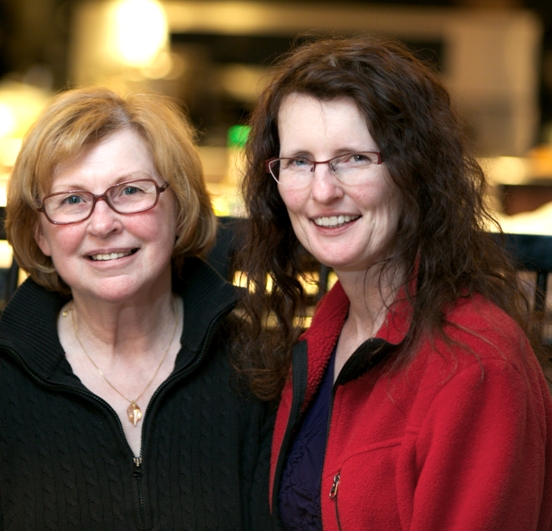
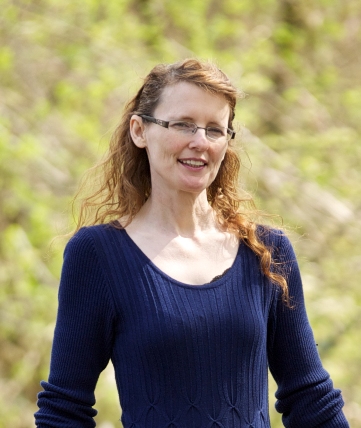
Author Archives: Margaret Jean

Office Etiquette: Humour Has It’s Place…

In my book, “Unforgiving, Memoir of an Asperger Teen”, I talk about finding myself in an unfamiliar environment on at least two occasions.  If I had known the appropriate etiquette, I could have been spared much embarrassment.  So to save you, my friends, from suffering the same awkward moments at work, I’m offering you these Office Behavior Etiquette Tips:

Choose humor over swearing.

When conversing, give co-workers a respectable distance of 15 inches.

Smile often and acknowledge them as a sign of respect. 

Cell Phones:

Screen your calls using caller ID.  Set your phone to vibrate and let voice mail pick up.

Anticipate potential callers and call them first — before work.

Never answer your phone when you’re in a meeting.  If it’s life and death urgent, leave the meeting.  Go out of the room, and speak quietly if you really must take the call.

Don’t make your phone visible on a desk or a lunch table.

When you do eat with others, chew wisely and while they are talking instead of when you are talking.

These rules of office etiquette come from:   http://ca.askmen.com/money/professional_150/161_professional_life.html

Yours truly,

Margaret Jean.

Tagged , ,

Employers and Autism: Why Would I Hire a Person With Asperger’s??

Want the best person for the job?  Someone focused, methodical, honest and reliable?  You could be looking for someone on the autism spectrum.

According to a bulletin from the National Autistic Society Northern Ireland and the Department for Employment and Learning (N. Ireland), people on the autism spectrum have some stellar qualities to offer.

“People with autism can make effective and highly valued employees,” the article begins.

“As is the case with all employees, it’s important to match the person’s particular skills to the requirements of the post.”

“People with autism are often very focused and have considerable skills in specific areas.”

“Some of the transferable skills include: attention to detail, a methodical approach, strong research skills,  good long term memory and excellent record-keeping.”

For more information on this topic, see:  http://www.equalityni.org/archive/pdf/Employingpeoplewithautism.pdf

Why not hire a person with Asperger’s?

Yours truly,

Margaret Jean.

Tagged

Asperger’s and Autism: Disorder? Disability? Or Difference?

While some folks out there see autism and Asperger’s as disabilities or disorders, while they are busy searching for cures, others like Dr. Simon Baron-Cohen of Cambridge University and Dr. Jim Tanaka of the University of Victoria, BC see these syndromes as conditions.  Conditions that do not necessarily call for cures.

While some disabilities are created by the syndrome, certain talents often also result.  One examples of this theory is Temple Grandin, a brilliant animal behaviourist with autism.

Baron-Cohen gives the further example of Einstein who said, “I do not socialize because it would distract me from my work.”

He also points out that people on the spectrum are far more interested in how systems work than in social cognition.

Jim Tanaka has done work on facial recognition, and developed new games as a result of his research that help ASD children with social interaction.

He encourages everyone to look at ASD not as a disability but as a difference integral to one’s personality.

I agree!

Yours truly,

Margaret Jean.

Tagged , , , ,

What Is Normal? Non-verbal Autistic Child: Siblings in Autism

Click on the video!  This is a fascinating insight into family life when one child is autistic.

The non-autistic sibling gives her point of view of the family dynamic and her relationship with her brother, which gives the video a unique focus.

The father is Mike Lake, an MP from Edmonton.

Enjoy!

Yours truly,

Margaret Jean.

Tagged

About Autism Syndrome Disorder: Did You Know….

Bev & I blogMy adult daughter, who is diagnosed with Asperger’s, came home one day and told me how surprised she was to find that most people when they enter a room?  Look at the people.

“I always look at the layout of the room,” she explained, “how the seats are laid out, where the doors are, where the teacher is working from, what equipment is in the room, where the windows are.  I never thought to look at the people.”

This is an example of what Dr. Jim Tanaka of UVic says about difference in perception between those with and those without ASD.  It also illustrates Simon Baron-Cohen’s point that kids on the spectrum find systems more fascinating than people.

Other problems of perception happen because of focus.  At SFU, I was an English Lit major.  It took me ten years to get my degree as a mature student.  I can’t believe in all that time, I never realized that SFU has an Autism and Developmental Disorders Lab.  I was totally focused on English classes, which were in different wings than the sciences.

I now know that lab is headed by Dr. Grace Iarocci, and its current focus is the way in which visual perception is affected both negatively and positively by processes of attention.

This year, they’re co-hosting three community events about ASD kids, their families and the quality of life.  The idea is to open a discussion about quality of life issues for ASD  individuals, care givers, professionals and families.  It’s free, open to the public.  Watch their website for scheduling:  http://autismlab.psyc.sfu.ca/events

Dr. Iarocci apparently has influence with the government and bodies determining ASD funding, so please do attend and voice your opinion loud and clear.

Yours truly,

Margaret Jean.

Tagged , , ,

Do ASD Kids Love Trains?

Dr. Grace Iarocci, director of SFU’s Autism and other Developmental Disorders Lab is currently managing a research project about children ages 6 to 19 years who are fascinated with trains.

This reminds me of a study done in the UK in 2001.  The UK study took 81 parents of autistic children and found that 57% of the  parents surveyed said that their autistic child related to Thomas the Tank Engine before relating to any children.

To quote the SFU notice:

“The goal of this study is to understand how special interests develop, how they affect learning about trains and how this learning is related to learning about social things.

For example, do we recognize trains as easily as we recognize faces? Ultimately, we want to understand how we might make use of the high internal motivation to learn about objects and apply that to aspects of children’s learning that they might be less interested in.

Participants will engage in game-like computer activities, paper and pencil tasks, and other actives at Simon Fraser University, Burnaby campus. Scheduling is flexible and there is a small monetary thank you for participating (movie pass, Chapters gift card, or cash).

All of our researchers have undergone research training, criminal records checks, and have experience working with children on the autism spectrum.

For more information and to sign up, please email Sarah at addl@sfu.ca or call our research lab at 778-782-6746. There are limited appointments available so sign up
today!”

Remember, your participation in these research projects insures that your voice will be heard, so please give them a call!

Yours truly,

Margaret Jean.

Tagged , , ,

Asperger’s Syndrome: What It Is and How It Translates To Behaviour In the Workplace.


My Daughter, Bev, shared some of her work experiences.

My Daughter, Bev, shared some of her work experiences.

Recently I was asked to speak to the Ladner Rotary Club about Asperger’s Syndrome.  I gratefully agreed.  Any opportunity to spread knowledge about Asperger’s is to be seized and capitalized upon!

The first person I turned to was my daughter, Bev, who is a Special Education Assistant in a large highschool.  She also has Asperger’s herself, as does her older son.  Between him and me, she sometimes found herself with her hands full!

Ever practical, Bev immediately sized up the situation and decided we should talk about Asperger’s in the workplace.

Here is a brief bit of Bev’s part of the talk:

Bev talked about how anxiety over minor problems can seem overwhelming to someone with Asperger’s.  About the difficulty people on the spectrum can have with the inability to remember and recognize co-workers, even after working with them for a considerable time, something Dr. Jim Tanaka of UVic refers to as “face blindness”.

She also talked about how rules and structure are the spectrum person’s comfort zone, how her son said of his job, “They have routine, Mom.  Rules,  Yes!” And how it was his love of structure and routine that earned him a full time job almost immediately after he started in a temporary position with the company.

People in the spectrum need training and guidance.  “Tell us what to do and how to do it,” Bev said, “and we will gladly get the job done.”

Tagged , ,

Asperger’s Syndrome: Origins.

Margaret Jean, Irene Good and Beverly at the Ladner Rotary Luncheon.

Margaret Jean, Irene Good and Beverly at the Ladner Rotary Luncheon.

Recently, I was asked to give a talk to the Ladner Rotary Club on Asperger’s.   The date they had in mind was only four days away.  Probably their scheduled speaker bailed, but I’m just happy to have a chance to increase awareness.  It’s all good, right?   Four days?  I could do this.

I phoned my daughter, Bev right away.

“A room full of business people?”  Bev asked.  “Great.  We’ll talk about Asperger’s in the workplace.”  See why I called her?  Bev always knows what to do.

“Okay, I’ll talk about the origins of Asperger’s just to be sure they know what it is, and you do the workplace part,”  I said.  She agreed.

Here’s a bit of my part of the speech.

Thanks for inviting us to speak today.  Free lunch is always good.  But imagine if someone, say a co-worker, asks a person to lunch, and right away that person becomes anxious?  Clearly apprehensive.  Wouldn’t that be amazing?  But for some people with Asperger’s, it wouldn’t be unusual.

So what is Asperger’s, anyway?  And why is it called that?

Asperger’s came to be known as such this way:  In 1944, in Austria, a paediatrician detected some odd behaviour in four of his young patients.  They did not socialize well with the other children.  Their non-verbal communication skills were virtually non-existent.  When they talked?  Their language was stilted or formal.  And they seemed to each have a favorite topic which was of intense interest to them, and therefore dominant in their conversations.  And finally, they seemed to have little or no empathy with the other children.

These findings were published, but only in Germany.  The doctor’s name was Dr. Hans Asperger.

It wasn’t until 1981 when a British physician and psychiatrist, a Dr. Lorna Wing, published several case studies of her own, that Asperger’s was introduced to the world.  Dr. Wing’s case studies exhibited similar symptoms as the children the Austrian doctor had observed, and she referred to them as having “Asperger’s Syndrome”.

Her studies were widely read and published, and her 1996 study is considered by some to be the definitive work on Asperger’s.

In 1992 the World Health Organization added Asperger’s to its list of diseases and disorders.  In 1994, The American Psychiatric Association added it to their manual of Mental Disorders.

But today, researchers such as Simon Baron-Cohen of Cambridge University and Dr. Jim Tanaka of UVic emphasize that Asperger’s is not so much a disorder, disability or disease; It is more a difference in how the brain processes information.

Stay tuned next week for Bev’s part of the talk!

Yours truly,

Margaret Jean.

Tagged , ,

Calling All Aspies! ASD Research Project; BC Lower Mainland

That is an interesting video!  Jim Tanaka from the University of Victoria explains how he got into Autism studies and how they led to the development of facial recognition games for kids on the spectrum.

By the way, Aspies, are you looking for something to do? Would you like to participate in some current university research?  If you live in B.C.s lower mainland, you’re in luck!

Subjects aka participants are being recruited for a joint SFU/UBC study into the difference in visual perception between those with and those without ASD.

The researchers are looking for adults, that is, people 18 and over, with an ASD diagnosis.  They would also like the parent or caregiver to attend.

For more info on this study go to:  http://autismlab.psyc.sfu.ca/event

Yours truly,

Margaret Jean.

Asperger’s Syndrome: What is it, exactly?

What is Asperger’s syndrome?

This article is taken from webmd.com

Asperger’s syndrome is a developmental disorder that makes it very hard to interact with other people. Your child may find it hard to make friends because he or she is socially awkward.

People with Asperger’s syndrome have some traits of autism. For example, they may have poor social skills, prefer routine, and not like change. But unlike those who have autism, children with Asperger’s syndrome usually start to talk before 2 years of age, when speech normally starts to develop.

Asperger?s syndrome is a lifelong condition, but symptoms tend to improve over time. Adults with this condition can learn to understand their own strengths and weaknesses. And they can improve their social skills.

Both Asperger’s syndrome and autism belong to the group of disorders called pervasive developmental disorders (pdd).

What causes Asperger’s syndrome?

The exact cause of Asperger’s syndrome is not known. And there is no known way to prevent it. It tends to run in families. So researchers are doing studies to look for a genetic cause.

What are the symptoms?

Asperger’s syndrome is usually noticed at age 3 or later. Symptoms vary, so no two children are the same. Children with Asperger?s:

  • Have a very hard time relating to others. It doesn’t mean that they avoid social contact. But they lack instincts and skills to help them express their thoughts and feelings and notice others’ feelings.
  • Like fixed routines. Change is hard for them.
  • May not recognize verbal and nonverbal cues or understand social norms. For example, they may stare at others, not make eye contact, or not know what personal space means.
  • May have speech that?s flat and hard to understand because it lacks tone, pitch, and accent. Or they may have a formal style of speaking that?s advanced for their age.
  • May lack coordination; have unusual facial expressions, body postures, and gestures; or be somewhat clumsy.
  • May have poor handwriting or have trouble with other motor skills, such as riding a bike.
  • May have only one or a few interests, or they may focus intensely on a few things. For instance, they may show an unusual interest in snakes or star names or may draw very detailed pictures.
  • May be bothered by loud noises, lights, or strong tastes or textures.

How is Asperger?s syndrome diagnosed?

If you are concerned about your child?s behavior or communication style, talk to your child?s doctor. He or she will ask you about your child?s development and ask if other people have noticed your child?s social problems.

The doctor may refer you to a specialist to confirm or rule out Asperger?s syndrome. The specialist may test your child?s learning style, speech and language, IQ, social and motor skills, and more.

http://www.webmd.com/brain/autism/tc/aspergers-syndrome-topic-overview

Tagged , , ,