Tag Archives: Asperger’s

For Adults with Asperger’s: Overcoming Obstacles to Getting That Job…

Famous people with Asperger’s give us hope….

80% of grown-ups with Aspergers do not have full-time jobs.

This alarming statistic comes from the webpage, “My Asperger’s Child”.  In a recent article, the authors maintain the reason behind this statistic is not the lack of education or intelligence, but the lack of social skills which would allow employees with Asperger’s to perform their tasks in a “socially acceptable” manner.

“Countless studies show individuals would rather have pleasant and personable co-workers than a co-worker who is always right,” the authors point out.

They conclude that people with Aspergers must compensate for their lack of social competence by “making themselves so good in a specialized field that individuals will be willing to “buy” their skill even though social skills are poor”.

They go on to state that Aspies “need to learn a few social survival skills,” but situating themselves in work groups that are highly specialized is what these authors see as the real solution.  In their minds, Aspies would have more access to social relationships involving work colleagues because of very specific work-related interests.

While I do consider this good advice, I also maintain that working hard at learning social skills is equally important.  There are so many books, videos and online lectures on the subject…Let us do our best in both arenas.

Yours truly,

Margaret Jean.

Read more at: http://www.myaspergerschild.com/2010/10/best-and-worst-jobs-for-aspergers.html
Tagged , , , ,

Office Etiquette: Humour Has It’s Place…

In my book, “Unforgiving, Memoir of an Asperger Teen”, I talk about finding myself in an unfamiliar environment on at least two occasions.  If I had known the appropriate etiquette, I could have been spared much embarrassment.  So to save you, my friends, from suffering the same awkward moments at work, I’m offering you these Office Behavior Etiquette Tips:

Choose humor over swearing.

When conversing, give co-workers a respectable distance of 15 inches.

Smile often and acknowledge them as a sign of respect. 

Cell Phones:

Screen your calls using caller ID.  Set your phone to vibrate and let voice mail pick up.

Anticipate potential callers and call them first — before work.

Never answer your phone when you’re in a meeting.  If it’s life and death urgent, leave the meeting.  Go out of the room, and speak quietly if you really must take the call.

Don’t make your phone visible on a desk or a lunch table.

When you do eat with others, chew wisely and while they are talking instead of when you are talking.

These rules of office etiquette come from:   http://ca.askmen.com/money/professional_150/161_professional_life.html

Yours truly,

Margaret Jean.

Tagged , ,

About Autism Syndrome Disorder: Did You Know….

Bev & I blogMy adult daughter, who is diagnosed with Asperger’s, came home one day and told me how surprised she was to find that most people when they enter a room?  Look at the people.

“I always look at the layout of the room,” she explained, “how the seats are laid out, where the doors are, where the teacher is working from, what equipment is in the room, where the windows are.  I never thought to look at the people.”

This is an example of what Dr. Jim Tanaka of UVic says about difference in perception between those with and those without ASD.  It also illustrates Simon Baron-Cohen’s point that kids on the spectrum find systems more fascinating than people.

Other problems of perception happen because of focus.  At SFU, I was an English Lit major.  It took me ten years to get my degree as a mature student.  I can’t believe in all that time, I never realized that SFU has an Autism and Developmental Disorders Lab.  I was totally focused on English classes, which were in different wings than the sciences.

I now know that lab is headed by Dr. Grace Iarocci, and its current focus is the way in which visual perception is affected both negatively and positively by processes of attention.

This year, they’re co-hosting three community events about ASD kids, their families and the quality of life.  The idea is to open a discussion about quality of life issues for ASD  individuals, care givers, professionals and families.  It’s free, open to the public.  Watch their website for scheduling:  http://autismlab.psyc.sfu.ca/events

Dr. Iarocci apparently has influence with the government and bodies determining ASD funding, so please do attend and voice your opinion loud and clear.

Yours truly,

Margaret Jean.

Tagged , , ,

Asperger’s Syndrome: What It Is and How It Translates To Behaviour In the Workplace.


My Daughter, Bev, shared some of her work experiences.

My Daughter, Bev, shared some of her work experiences.

Recently I was asked to speak to the Ladner Rotary Club about Asperger’s Syndrome.  I gratefully agreed.  Any opportunity to spread knowledge about Asperger’s is to be seized and capitalized upon!

The first person I turned to was my daughter, Bev, who is a Special Education Assistant in a large highschool.  She also has Asperger’s herself, as does her older son.  Between him and me, she sometimes found herself with her hands full!

Ever practical, Bev immediately sized up the situation and decided we should talk about Asperger’s in the workplace.

Here is a brief bit of Bev’s part of the talk:

Bev talked about how anxiety over minor problems can seem overwhelming to someone with Asperger’s.  About the difficulty people on the spectrum can have with the inability to remember and recognize co-workers, even after working with them for a considerable time, something Dr. Jim Tanaka of UVic refers to as “face blindness”.

She also talked about how rules and structure are the spectrum person’s comfort zone, how her son said of his job, “They have routine, Mom.  Rules,  Yes!” And how it was his love of structure and routine that earned him a full time job almost immediately after he started in a temporary position with the company.

People in the spectrum need training and guidance.  “Tell us what to do and how to do it,” Bev said, “and we will gladly get the job done.”

Tagged , ,

Asperger’s Syndrome: Origins.

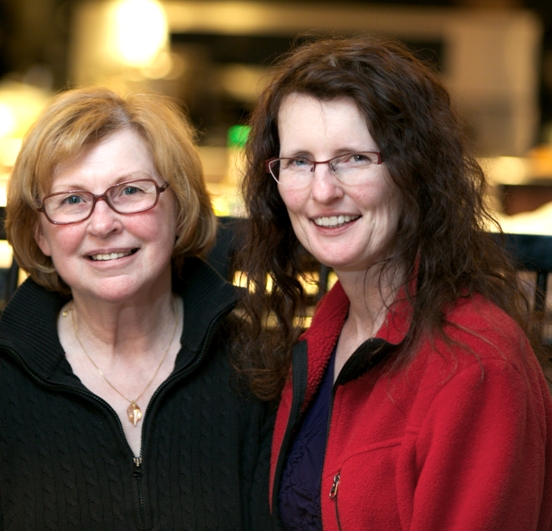
Margaret Jean, Irene Good and Beverly at the Ladner Rotary Luncheon.

Margaret Jean, Irene Good and Beverly at the Ladner Rotary Luncheon.

Recently, I was asked to give a talk to the Ladner Rotary Club on Asperger’s.   The date they had in mind was only four days away.  Probably their scheduled speaker bailed, but I’m just happy to have a chance to increase awareness.  It’s all good, right?   Four days?  I could do this.

I phoned my daughter, Bev right away.

“A room full of business people?”  Bev asked.  “Great.  We’ll talk about Asperger’s in the workplace.”  See why I called her?  Bev always knows what to do.

“Okay, I’ll talk about the origins of Asperger’s just to be sure they know what it is, and you do the workplace part,”  I said.  She agreed.

Here’s a bit of my part of the speech.

Thanks for inviting us to speak today.  Free lunch is always good.  But imagine if someone, say a co-worker, asks a person to lunch, and right away that person becomes anxious?  Clearly apprehensive.  Wouldn’t that be amazing?  But for some people with Asperger’s, it wouldn’t be unusual.

So what is Asperger’s, anyway?  And why is it called that?

Asperger’s came to be known as such this way:  In 1944, in Austria, a paediatrician detected some odd behaviour in four of his young patients.  They did not socialize well with the other children.  Their non-verbal communication skills were virtually non-existent.  When they talked?  Their language was stilted or formal.  And they seemed to each have a favorite topic which was of intense interest to them, and therefore dominant in their conversations.  And finally, they seemed to have little or no empathy with the other children.

These findings were published, but only in Germany.  The doctor’s name was Dr. Hans Asperger.

It wasn’t until 1981 when a British physician and psychiatrist, a Dr. Lorna Wing, published several case studies of her own, that Asperger’s was introduced to the world.  Dr. Wing’s case studies exhibited similar symptoms as the children the Austrian doctor had observed, and she referred to them as having “Asperger’s Syndrome”.

Her studies were widely read and published, and her 1996 study is considered by some to be the definitive work on Asperger’s.

In 1992 the World Health Organization added Asperger’s to its list of diseases and disorders.  In 1994, The American Psychiatric Association added it to their manual of Mental Disorders.

But today, researchers such as Simon Baron-Cohen of Cambridge University and Dr. Jim Tanaka of UVic emphasize that Asperger’s is not so much a disorder, disability or disease; It is more a difference in how the brain processes information.

Stay tuned next week for Bev’s part of the talk!

Yours truly,

Margaret Jean.

Tagged , ,

Asperger’s Syndrome: What is it, exactly?

What is Asperger’s syndrome?

This article is taken from webmd.com

Asperger’s syndrome is a developmental disorder that makes it very hard to interact with other people. Your child may find it hard to make friends because he or she is socially awkward.

People with Asperger’s syndrome have some traits of autism. For example, they may have poor social skills, prefer routine, and not like change. But unlike those who have autism, children with Asperger’s syndrome usually start to talk before 2 years of age, when speech normally starts to develop.

Asperger?s syndrome is a lifelong condition, but symptoms tend to improve over time. Adults with this condition can learn to understand their own strengths and weaknesses. And they can improve their social skills.

Both Asperger’s syndrome and autism belong to the group of disorders called pervasive developmental disorders (pdd).

What causes Asperger’s syndrome?

The exact cause of Asperger’s syndrome is not known. And there is no known way to prevent it. It tends to run in families. So researchers are doing studies to look for a genetic cause.

What are the symptoms?

Asperger’s syndrome is usually noticed at age 3 or later. Symptoms vary, so no two children are the same. Children with Asperger?s:

  • Have a very hard time relating to others. It doesn’t mean that they avoid social contact. But they lack instincts and skills to help them express their thoughts and feelings and notice others’ feelings.
  • Like fixed routines. Change is hard for them.
  • May not recognize verbal and nonverbal cues or understand social norms. For example, they may stare at others, not make eye contact, or not know what personal space means.
  • May have speech that?s flat and hard to understand because it lacks tone, pitch, and accent. Or they may have a formal style of speaking that?s advanced for their age.
  • May lack coordination; have unusual facial expressions, body postures, and gestures; or be somewhat clumsy.
  • May have poor handwriting or have trouble with other motor skills, such as riding a bike.
  • May have only one or a few interests, or they may focus intensely on a few things. For instance, they may show an unusual interest in snakes or star names or may draw very detailed pictures.
  • May be bothered by loud noises, lights, or strong tastes or textures.

How is Asperger?s syndrome diagnosed?

If you are concerned about your child?s behavior or communication style, talk to your child?s doctor. He or she will ask you about your child?s development and ask if other people have noticed your child?s social problems.

The doctor may refer you to a specialist to confirm or rule out Asperger?s syndrome. The specialist may test your child?s learning style, speech and language, IQ, social and motor skills, and more.

http://www.webmd.com/brain/autism/tc/aspergers-syndrome-topic-overview

Tagged , , ,

Aspie Hideaways–I Could Use One Now!

Feeling very Aspergerish this morning, not wanting to leave the house, but committed to volunteering at the Surrey International Writers’ Conference.

In addition, there is church sometime today, my great meditational calm in the midst of the chaos of having the landlord’s stuff arrive at noon three days before we are slated to move out and five days before our tenancy officially ends.

And the finalization tomorrow of moving–packing all the very last things, picking a daughter up at the ferry, making sure there’s enough linens for her bed,   I put on a cheerful face each morning but confess to momentary flashes of crawling in a hole and hiding.

Years ago I was a park caretaker at William’s Park in Langley.  It was quite isolated, which I’m not sure I appreciated at the time.

And I remember when things got too hectic, after the crowds had gone, on sunny afternoons, I would take a quilt and slip down the hill.  I’d cross the first bridge and take a left along the creek to where a great copper beech tree stood, past it and behind a bank of pine trees.

I’d spread my quilt on the green grass, the burbling of the brook soothing, behind me.  Lie down and let the warm sun wash over me.

I’d let go of the whole world, and slide down into sleep.

Mmmm, that memory soothes me now.

But the day awaits.  And Asperger’s or no, I must get up and get going.

Tagged , ,

Conundrum

27 Tuesday Aug 2013:  A Guest Blog

Posted by  at http://annkilter.com/

When we began going to autism workshops and conferences, we found ourselves the subject of many sales pitches for the newest therapies that would produce miracles.

We also were sometimes pressured by parents in the local Autism Society to make a commitment to purchase a certain therapist’s services in order to “bring her to our community.” Enough parents had to participate in order to pay for her services to make it worth her while to come. Auditory integration training would cost $2,000 for a set number of therapy sessions. Music therapy was $100 an hour.

There were two problems with this.

First, we could not afford it. We were just scraping by as it was. Several options were presented – beg the money from our relatives, put it on a credit card, get a bank loan or a second mortgage on the house.

Second, which one of our children would we choose? Choosing them all was out of the question.Should we choose our gifted, disruptive autistic son or our quiet, multiply learning disabled autistic oldest daughter? Or our youngest, questionably autistic daughter? An impossible choice.

Therefore, we said no. As result, we were ostracized for not “participating for the good of all the children in the area.”

Instead, we chose to invent our own therapies out of ordinary life.

We listened to classical music in the house for our music therapy.

We were blessed by a piano teacher who was willing to try to teach my son. He enjoyed music, singing in tune with gusto. After a year, she noted that he had an aptitude for music. She taught him for 12 years. After that year, we ask her to teach our oldest daughter in order to improve her finger strength and coordination. I thought it might help her learn to hold a pencil. My youngest daughter wanted to do what her brother and sister did. This cost $10 a week per child – a pay as you go therapy.

We chose to take advantage of community subsidized speech and occupational therapy offered by Easter Seals and the Rehabilitation Hospital. These required small payments times three.

In spite of extended and persevering effort, learning to ride a bike did not happen. Instead, we found equestrian therapy – offered at a discount due to the generous donations of the community – also paying as we went. Our children were unable to ride a bike due to balance issues, but they were able to eventually learn to ride a horse independently.

These choices stretched us financially, sometimes heavily, but we made the sacrifices on a weekly, monthly basis.

Choices of “miracle therapies” with little proof of efficacy would have bankrupted us.

From Ann Kilter: Conundrum–Therapies That Worked For Us.

Tagged , , , , , , ,

Steps To Socializing Your Aspie Teen.

As you can see from my last post, the issue of socializing is huge for Aspies.  This is especially true in the late pre-teen and early teen years.

Arranging a social event with a friend isn’t always the answer if the child with Asperger’s has trouble communicating in a meaningful way.  Just getting them together with  a “neurotypical” teen in a social setting isn’t going to help.  In fact, it can be disastrous.

Anna Matchneva from Burnaby BC works one on one with Asperger’s children, and this is what she suggested in a talk to parents last year.

First, limit the time for interaction to ‘safe’ time, that is time when the conversation will most likely be of mutual interest.

How do you do that?

Anna finds getting your teen Aspie to invite a friend for pizza and a movie is ideal.

First on the agenda is going to the movie.  When they are driving to the movie, they can talk about what movie they want to see and all the things they have heard about the movie.

Other topics may come up, but the drive to the theatre should not be too long, and the parent driving them can always intervene a little if necessary.

Next, at the movie, the parent drops them off.  The talk will be about arrangements to be picked up, how to buy the tickets and what snacks they want.  This is very safe also.

Once in the theater, everything should be good.  Although in my experience?  The Aspie child may have to be warned to be quiet and not comment during the movie, but save all their comments for afterward.

The time from the end of the movie to pick up should be minimal, to ensure that the conversational requirements don’t tax the Aspie child.

Then to the pizza parlour.  Again, conversation will center around the children’s preferences, and the movie action and how the children rate the movie.

After pizza, time for the guest to be dropped off at his/her home.

This kind of managed social time gives Aspie’s a sense of confidence which should ease both the child’s and the parent’s anxieties over social situations.

Let me know how it works if you try it, please!

Yours truly,

Margaret Jean.

Tagged , ,

What Is Asperger’s Anyway?

This weekend so many people asked me, What is Asperger’s?  How can I tell if my son has it?

My book, “Unforgiving, Memoir of an Asperger Teen” took a 1st place Journey award, and prompted a lot of questions about the syndrome.

People with Asperger’s find it difficult to read body language, voice intonation, and facial expression. This creates difficulty communicating and interacting with other people.

Asperger’s doesn’t always affect individuals to the same degree, or in exactly the same manner, which is why it is said to be on the “autism spectrum”.  That is, it is a highly functional and variable condition that alters how we relate to others, understand our community, and express ourselves.

Sometimes we feel hopelessly lost in a conversation.  We cannot always determine what is sincere and what is merely light-hearted social bantering.  Sometimes this is so isolating that we withdraw.  We do not understand what is being said or in what context and therefore we pretend to be disinterested.

This makes us very bad at small talk, which is society’s established method of feeling each other out before going into deeper conversations.  Small talk is a protective device that helps people locate each other in their social setting and their community, whether it’s school or work or something recreational.

People with Asperger’s tend to want to talk at a deeper level.  They have trouble understanding this is not appropriate much of the time.

We may not be able to tell when to join or start a conversation, or when the conversation is over.  We may talk over the other person and generally interrupt at lot.  A great website to look at for assistance is the UK’s National Autistic Society website at: http://www.autism.org.uk/about-autism/autism-and-asperger-syndrome-an-introduction/what-is-asperger-syndrome.aspx.

Tagged , ,